In automotive manufacturing, corrosion is rarely visible at first—until it becomes a serious problem. When structural failures finally appear, their root cause is often found much earlier in the paint process, at a critical and frequently underestimated stage: the ELPO coating.
Electrodeposition coating (ELPO) is the first real protective barrier of a car body. If this layer fails, no subsequent process—neither primer coat nor top coat—can truly compensate for it. For this reason, ELPO coating inspection has become a key control point for manufacturers seeking long-term durability, stable quality, and zero surprises in later production stages.
At J3D Vision, we work with real automotive production lines, where stopping the line is never an option. That’s why we develop automatic ELPO coat inspection systems capable of detecting structural coating defects immediately after electrodeposition—when they can still be corrected without operational disruption or economic impact.
In this article, we explain why ELPO inspection is critical, which coating defects typically appear at this stage, and how machine vision enables reliable anti-corrosion protection from the very first step of the paint process.
What ELPO inspection really involves
The ELPO process—also known as cathodic electrodeposition—has one clear mission: to protect the car body against corrosion over its entire lifespan, even under extreme conditions such as humidity, salt exposure, or thermal stress.
Unlike other paint layers, ELPO coating:
- Has no aesthetic purpose
- Is invisible to the end customer
- Leaves no room for structural errors
A defect at this stage may remain hidden for months or even years before leading to:
- Internal corrosion
- Adhesion failures in subsequent layers
- Quality audit rejections
- Long-term durability issues in the finished vehicle
The challenge is that many ELPO-related coating defects are difficult—or impossible—to detect through manual inspection, especially in:
- Hidden areas
- Edges and folds
- Wet surfaces immediately after the ELPO bath
- Complex chassis geometries
This is where automated ELPO inspection stops being a “nice-to-have” and becomes an industrial quality requirement.
Why ELPO inspection is critical in modern automotive production
The electrodeposition bath has a unique responsibility: to coat every millimeter of exposed metal, including internal cavities and sharp edges, forming a continuous anti-corrosion layer.
However, the process is not infallible.
An anti-corrosion coating system may present critical defects that, if not detected before curing or before applying subsequent layers, become buried beneath the final paint finish.
Ignoring these defects can lead to serious consequences:
- Warranty claims: Perforation corrosion appearing after 3–4 years often originates from air bubbles or uncovered areas in the ELPO bath.
- Rework costs: Detecting cathodic coating failures during final inspection—after top coat application—is a logistical and financial nightmare.
- Structural compromise: In weld seams and edges, insufficient coating reduces the long-term integrity of the body structure.
Automatic paint inspection at the ELPO stage enables true preventive quality control: if something goes wrong in the bath, it is detected immediately—not three stations later.
Automated detection of coating defects: beyond human vision
How do you detect defects on a wet, dark surface?
The answer is not a conventional camera, but a combination of advanced hardware and deep learning algorithms.
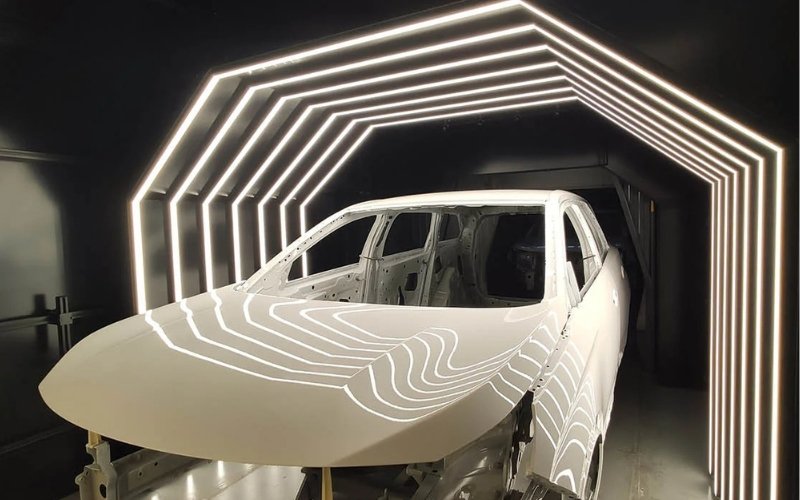
At J3D Vision, we have refined ELPO coat inspection through the integration of optimized multispectral lighting—capable of neutralizing water reflections—and AI-based models trained to identify coating defects specific to immersion processes:
- Bubbles and cratering: Small air pockets preventing proper coating adhesion
- Thin spots and uncovered areas: Zones where electrical current failed to deposit sufficient material
- Surface contamination: Foreign particles trapped in the wet coating
- Defects in edges and hidden areas: Where geometry complicates uniform deposition
Unlike manual inspection, which is subjective and fatigue-prone, our 3D machine vision systems deliver consistent accuracy from the first vehicle of the shift to the last.
Benefits of automated ELPO inspection on the production line
Implementing machine vision solutions at the electrodeposition stage transforms quality control from a reactive function into a proactive one.
1. In-line integration without production stops
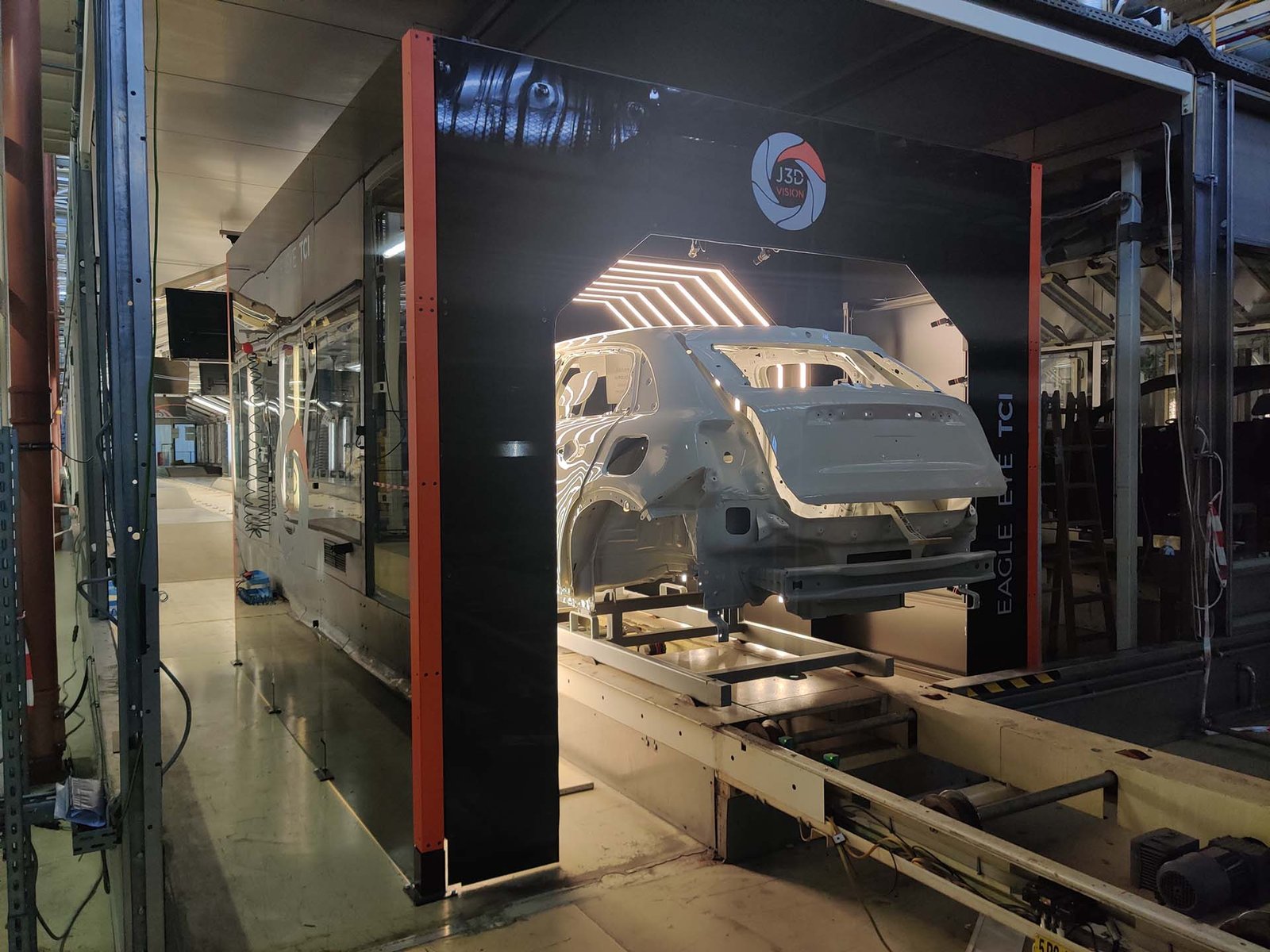
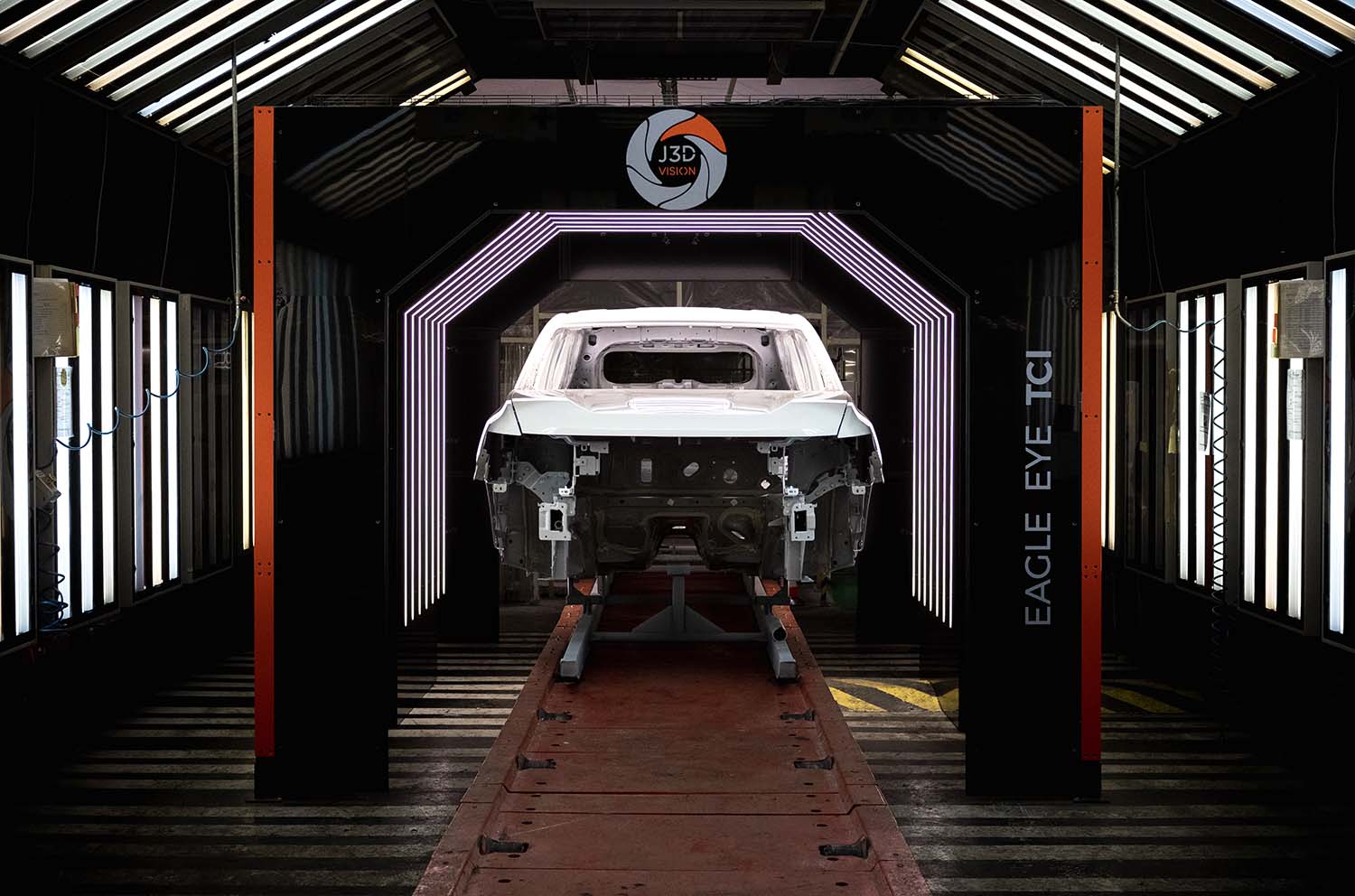
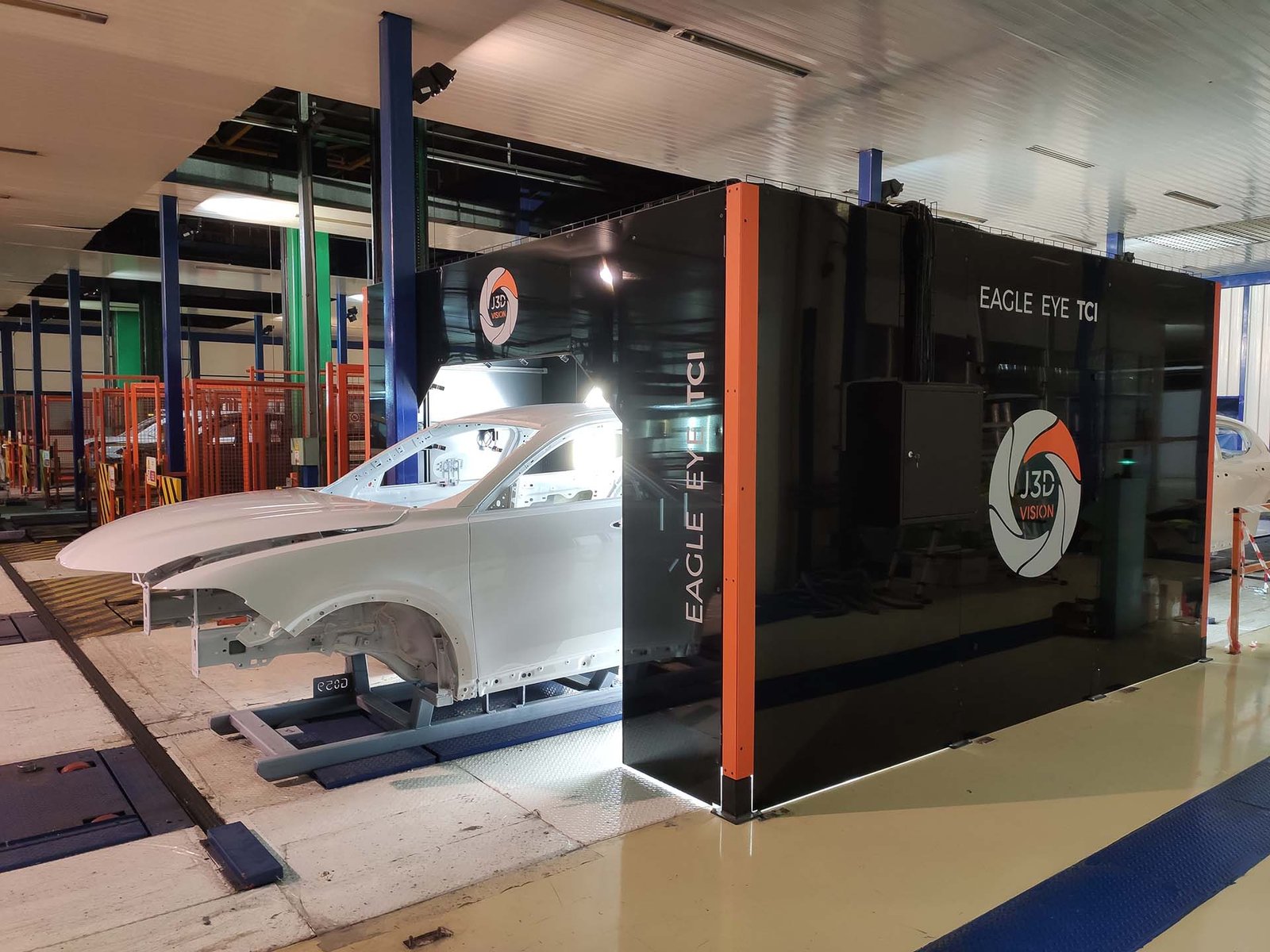
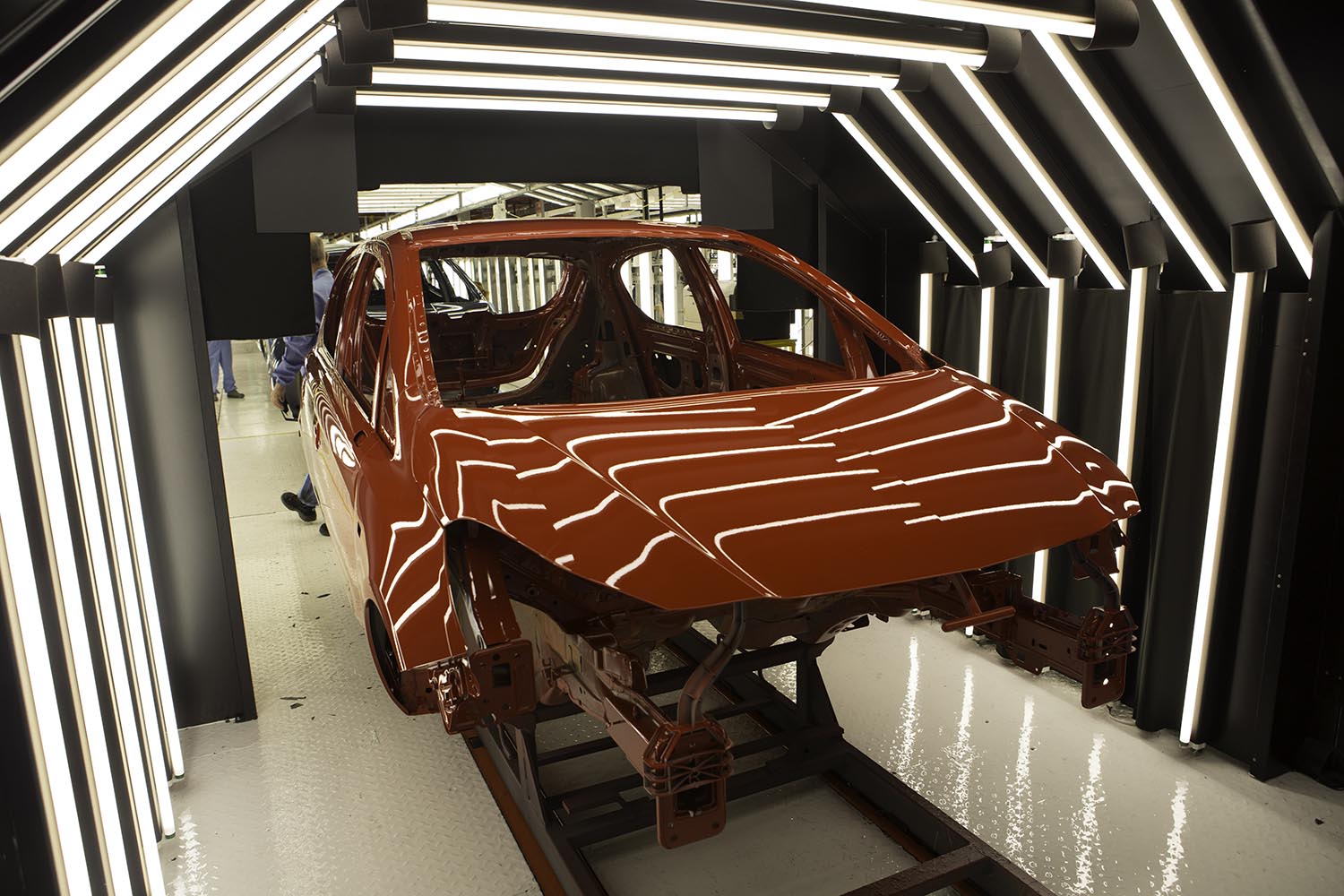
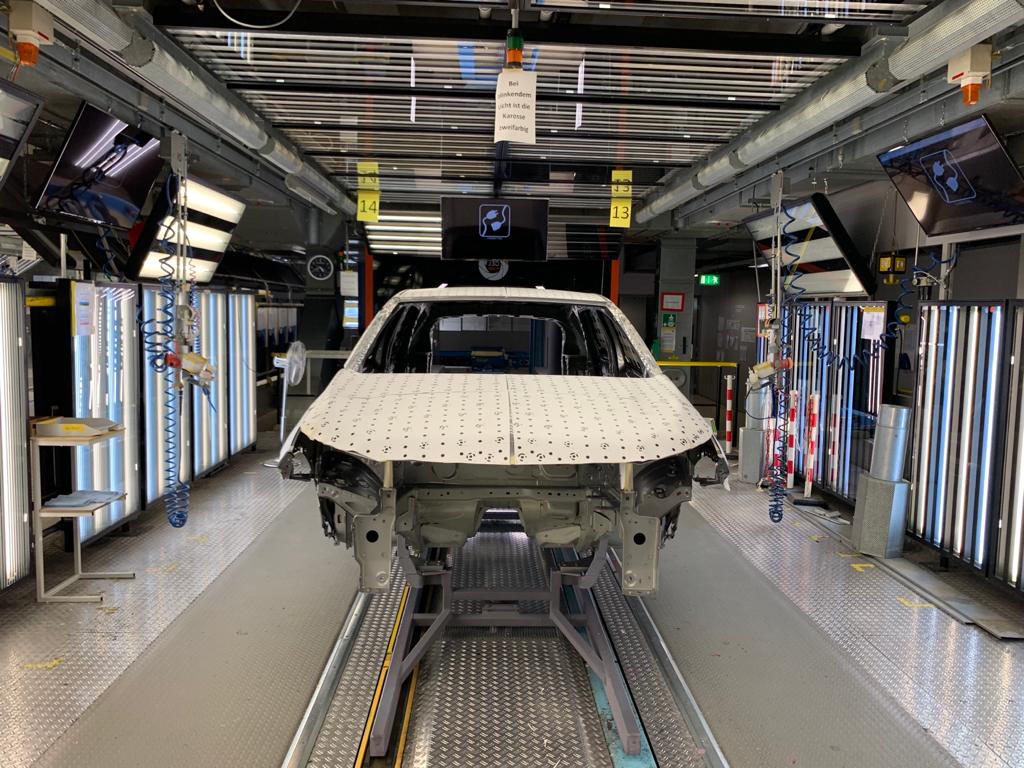
Our Eagle Eye technology inspects moving car bodies at speeds of up to 150 JPH. Vehicles remain on the line—no removal, no interruptions. Inspection is integrated as an intelligent tunnel immediately after the ELPO bath.
2. Full traceability per car body
Each vehicle generates a digital quality fingerprint. If corrosion issues arise years later, the plant has precise records of that unit’s ELPO condition. This level of traceability is increasingly demanded by global OEMs.
3. Reliability in harsh industrial environments
Electronics often struggle in the humid ELPO area. J3D Vision hardware is specifically designed for hostile industrial conditions, ensuring 24/7 reliability with minimal maintenance.
4. Reduced rework and material waste
Early defect detection allows targeted correction before defects escalate into costly repainting issues in later paint shop stages.
ELPO inspection as part of a global automotive quality strategy
ELPO coating inspection should not be treated as a standalone solution, but as part of an integrated automotive quality framework.
At J3D Vision, ELPO inspection systems are seamlessly combined with other automated inspection solutions:
- Top Coat Inspection: Control of final glossy finish
- Primer Coat Inspection: Detection of defects in the matte base layer
- Under Body Inspection: Quality control of sealants, plugs, and adhesives
This approach ensures full coverage of all critical paint and protection stages using a common, scalable, and traceable technology platform.
J3D Vision: A reference in automated coating inspection
Our experience with leading OEM groups such as Renault Group and Stellantis has taught us that no two production plants are the same.
We don’t sell cameras. We deliver manufacturing-grade engineering systems fully integrated with plant MES architectures, providing automated reports and real-time diagnostics.
For manufacturers committed to automotive quality excellence, ELPO inspection is the first non-negotiable step. A flawless ELPO coating is the foundation that ensures vehicles leaving the plant today will remain protected a decade from now.
Want to see how it would work in your plant?
Every production line has its own constraints. That’s why J3D Vision designs inspection systems adapted to real processes—not generic solutions.
If you want to see how automated ELPO coating inspection can improve anti-corrosion protection and eliminate defects from the very beginning of your paint process:
We’ll show you how to integrate the system without stopping production—and how to start seeing measurable results from day one.