In the automotive industry, many of the most critical issues remain invisible… until the vehicle is already on the road.
The Underbody is home to elements vital for a vehicle’s safety, durability, and watertightness. A minor error in this area can manifest months later as cabin noise, water leaks, corrosion, or even structural failure.
Historically, Underbody Inspection has been one of the most challenging phases of automotive quality control. Restricted access, irregular geometries, poor lighting, and unreliable manual processes have allowed far too many defects to slip through the cracks.
Today, automated Underbody Inspection is no longer an optional upgrade. It is an industrial necessity for manufacturers striving for zero assembly errors, full traceability, and consistent quality on increasingly demanding production lines.
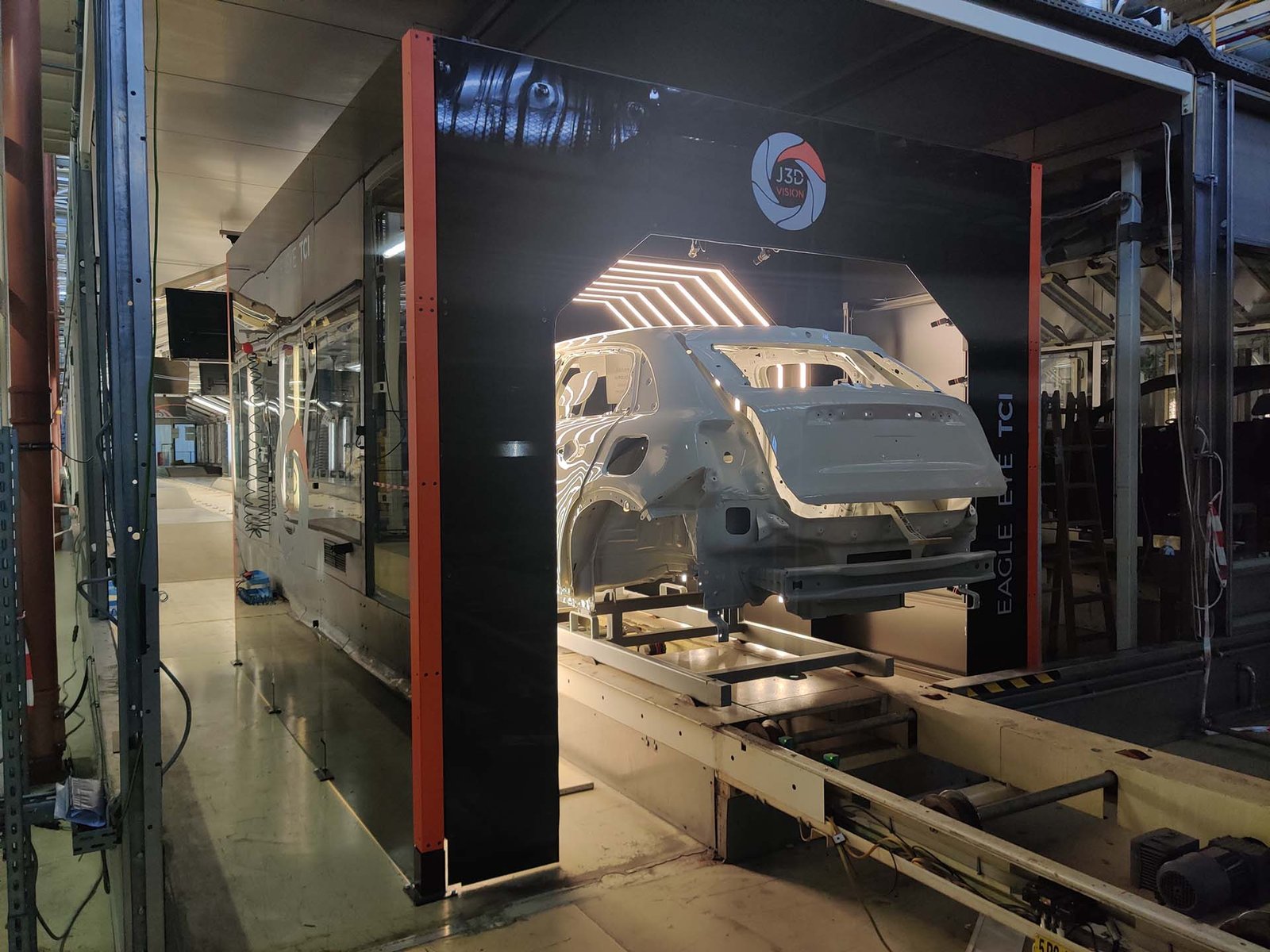
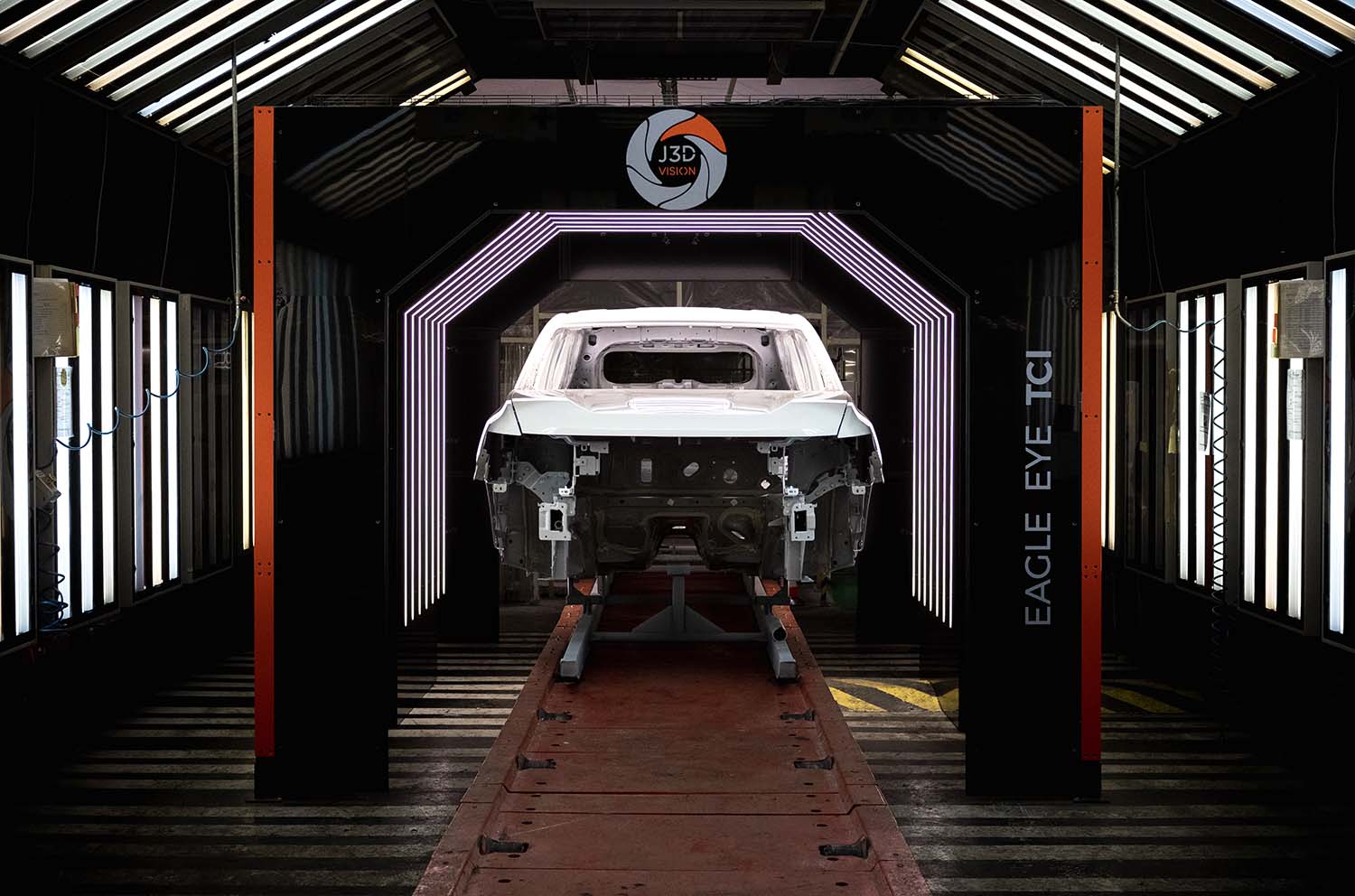
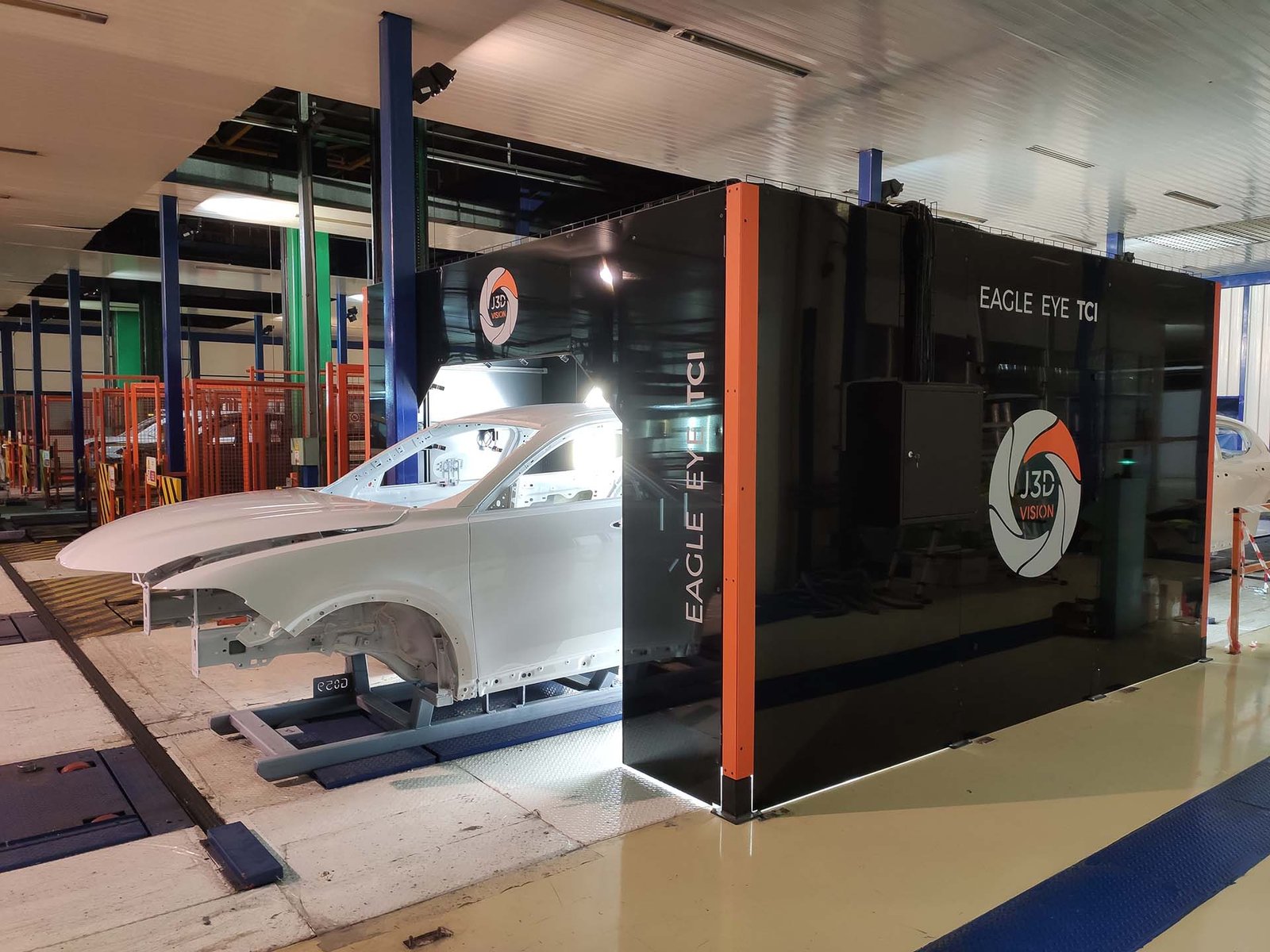
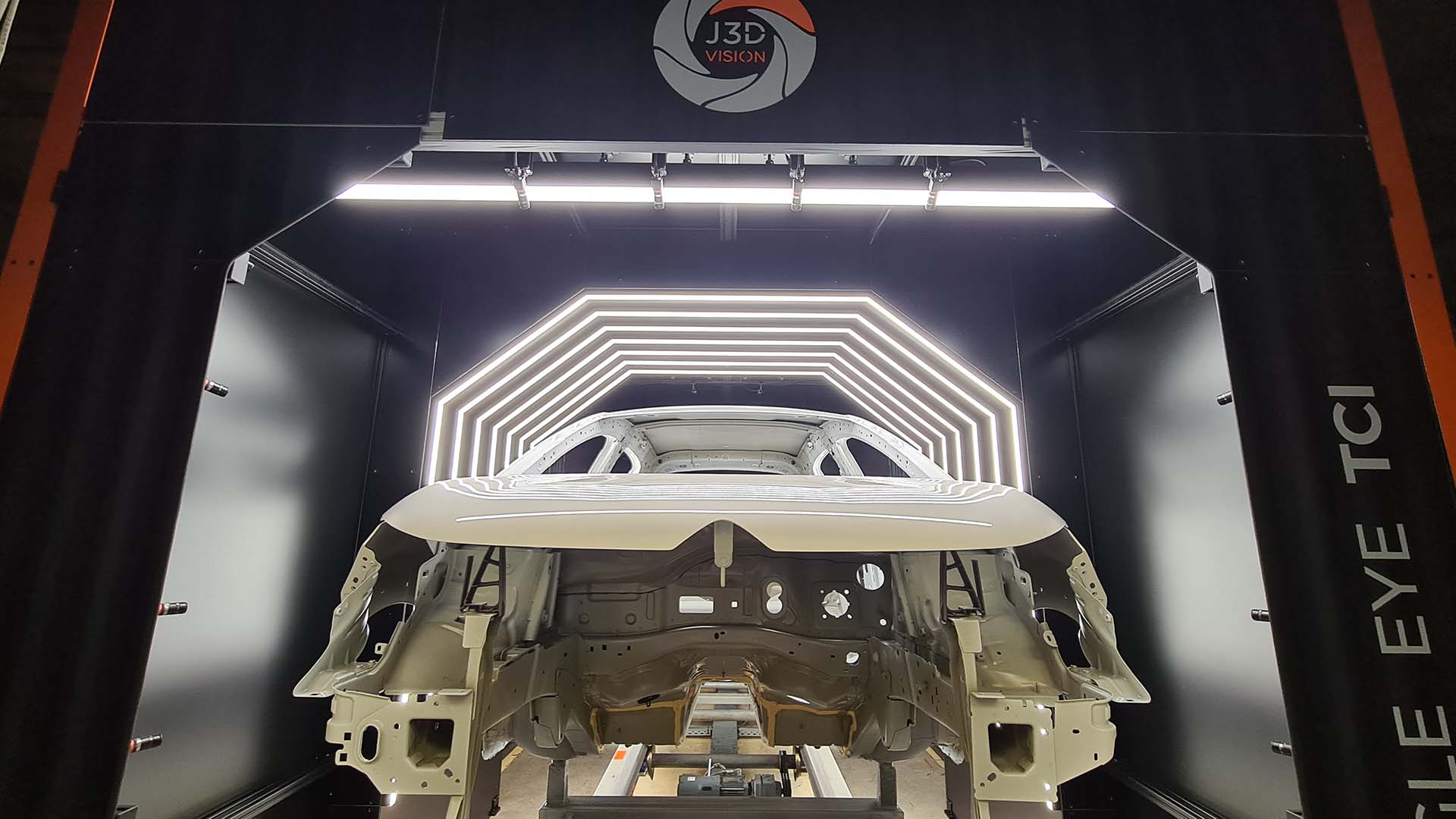
At J3D Vision, we operate directly within high-volume automotive plants where stopping production is never an option. This is why we developed Underbody Inspection systems capable of detecting defects in sealant beads, plugs, and adhesives without disrupting line cycle times.
In this article, we explore why Underbody Inspection is a cornerstone of quality, which errors occur most frequently, and how machine vision provides a reliable, automated solution.
Why the Underbody is critical to vehicle quality
The Underbody is more than just a support structure; it is the foundation of long-term vehicle reliability. This area contains:
- Sealant beads that guarantee watertightness.
- Plugs that seal technical access holes.
- Structural adhesives.
- Components constantly exposed to moisture, salt, impacts, and vibration.
An assembly error in the Underbody is rarely visible during final inspection. However, over time, it can lead to:
- Water ingress and cabin leaks.
- Aerodynamic noise (NVH issues).
- Premature oxidation.
- Expensive warranty claims.
- High costs associated with rework or recalls.
The challenge lies in the fact that most of these failures originate from tiny deviations: an incomplete sealant bead, a misaligned plug, or an adhesive applied outside of tolerance. This is where manual inspection reaches its limit.
The limitations of manual Underbody Inspection
For decades, Underbody quality has relied on the human eye. In a modern high-speed production environment, this carries significant risks:
- Limited Accessibility: The Underbody is one of the hardest areas to inspect. Shadows, complex angles, and obscured zones make it difficult to see everything, even with specialized lighting.
- Subjectivity: What one operator considers “acceptable,” another may see as a defect. This creates unacceptable variability in final quality.
- Fatigue and Line Speed: At high production cadences, visual inspection becomes a bottleneck—or worse, a mere formality with no real detection capability.
The result is clear: assembly errors move down the line undetected, increasing the cost of correction at every subsequent stage.
Automated detection of sealant bead defects
Underbody sealing has one critical mission: absolute watertightness. While robotic application is precise, it is not infallible. Issues with the application nozzle, fluctuations in material viscosity, or air bubbles can cause discontinuities that are nearly invisible to the naked eye.
3D sealant bead inspection allows for real-time monitoring of parameters that the human eye cannot quantify:
- Bead Continuity: Detecting breaks or gaps in the sealant application.
- Volume and Width: Ensuring the exact amount of material is deposited to guarantee a seal without wasting product.
- Positioning: Verifying that the bead follows the precise CAD trajectory, avoiding interference with other components.
By leveraging Deep Learning algorithms, our systems distinguish between a correct bead and an assembly error, alerting the line before the body enters the paint shop—where repairs become drastically more expensive.
Verifying plugs and adhesives
The Underbody is filled with technical holes required for the E-coat (ELPO) process or wiring routes. Once their purpose is served, they must be sealed with rubber or plastic plugs and specific adhesives.
What happens if a single plug is missing? The vehicle will suffer from water ingress, excessive noise (NVH), and accelerated interior degradation.
J3D Vision’s automated Underbody Inspection verifies the presence and correct seating of every element:
- Presence/Absence Detection: Instant confirmation that all plugs are in place.
- Seating Verification: Detecting “bitten” or improperly inserted plugs that could vibrate loose over time.
- Adhesive Identification: Checking that reinforcement or sound-dampening pads are bonded in the correct position and orientation.
All of this is achieved without stopping the line or touching the vehicle.
Benefits of automated Underbody Inspection
The transition to Industry 4.0 requires quality control to be preventive, not just reactive. The benefits of an automated Underbody solution are felt from day one:
- Eliminating human error and fatigue: Automation removes subjectivity and ensures the quality standard remains identical at 8:00 AM and 4:00 AM.
- Total traceability (VIN tracking): Every inspection generates a digital record linked to the specific chassis number. This is vital for quality audits and protects manufacturers against warranty disputes.
- Reducing scrap and rework costs: Detecting a defect while the car is still in the assembly zone allows for immediate correction. If the same error is found after the interior is fitted, the cost of disassembly and repair can increase tenfold.
- Optimizing cycle time (JPH): Our vision systems are designed to work within the line’s cycle time. There is no need to stop production; cameras capture and process images as the body moves, maintaining Jobs Per Hour (JPH) without compromising quality.
A global quality strategy
Underbody Inspection should not be a standalone solution; it is part of a comprehensive automotive quality strategy. At J3D Vision, these systems integrate seamlessly with our other core solutions:
- Top Coat Inspection: Monitoring the final finish.
- Primer Coat Inspection: Detecting defects in the base layer.
- ELPO Coat Inspection: Ensuring anti-corrosion protection from the very first step.
This holistic approach covers every critical phase of the process using common, scalable technology that integrates with your MES and PLC systems.
J3D Vision: advanced engineering for the Underbody
We don’t believe in one-size-fits-all solutions. We design automated inspection systems tailored to the specific needs of each plant, considering:
- Actual Underbody geometry.
- Line speed and cadence.
- Environmental conditions.
- Specific OEM quality requirements.
Our experience in live production environments allows us to deliver robust, reliable systems prepared to operate 24/7 in demanding industrial settings. In the automotive world, quality isn’t just checked at the end—it is guaranteed from the very first step.
Want to see how it would work in your plant? Request a personalized demo today. We will show you how to detect assembly errors, improve Underbody quality, and eliminate hidden costs in your production process.