In the car body painting process, the Primer Coat (primer surfacer) is a critical stage: it determines the leveling, adhesion, and aesthetic outcome of all subsequent layers. Unlike the final finish (Top Coat/Clear Coat), primer typically features low gloss and a texture that complicates visual inspection and reduces the performance of conventional machine vision.
A common plant approach is to intensify inspection during the Top Coat phase. However, many defects originating in the primer—such as pinholes, craters, lack of coverage, or contamination—can propagate, affecting the final finish and leading to costly rework.
The most efficient strategy is not “detection at the end,” but controlling the process earlier, when correction is faster and the impact on cost and cycle time is lower. This must always consider combined inspection with the Top Coat and full defect traceability between phases.
Low-contrast surfaces: the challenge of matte paint inspection
Inspecting matte surfaces presents two typical problems:
- Low optical contrast: Matte finishes scatter light, reducing the definition of edges and reliefs in the image.
- Low-signal defects: Micro-irregularities, particles, or thickness variations can remain masked by the paint’s own texture.
To address this scenario, specific lighting strategies and sensors are required. At J3D Vision, we employ a primer-oriented inspection architecture based on:
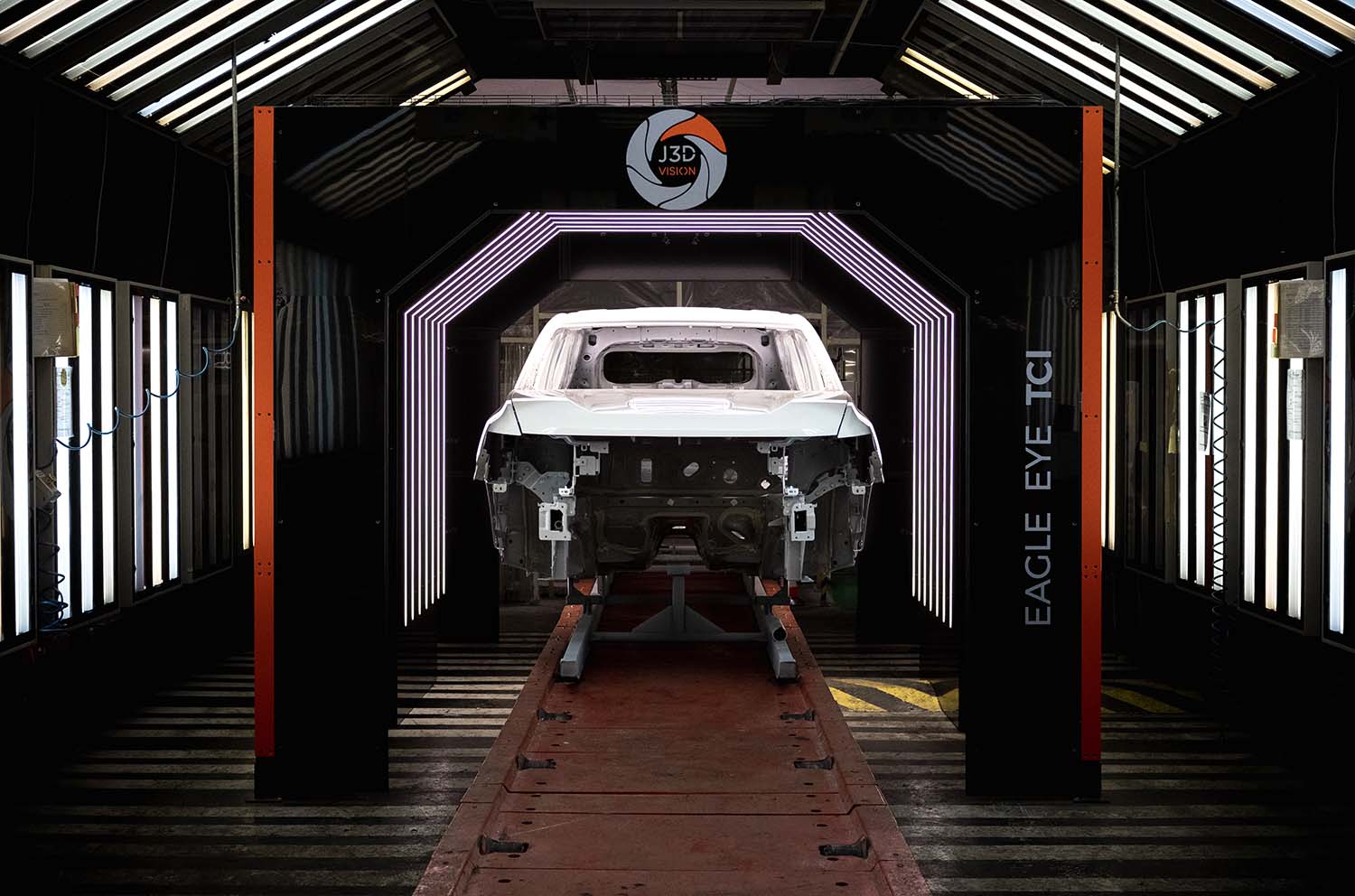
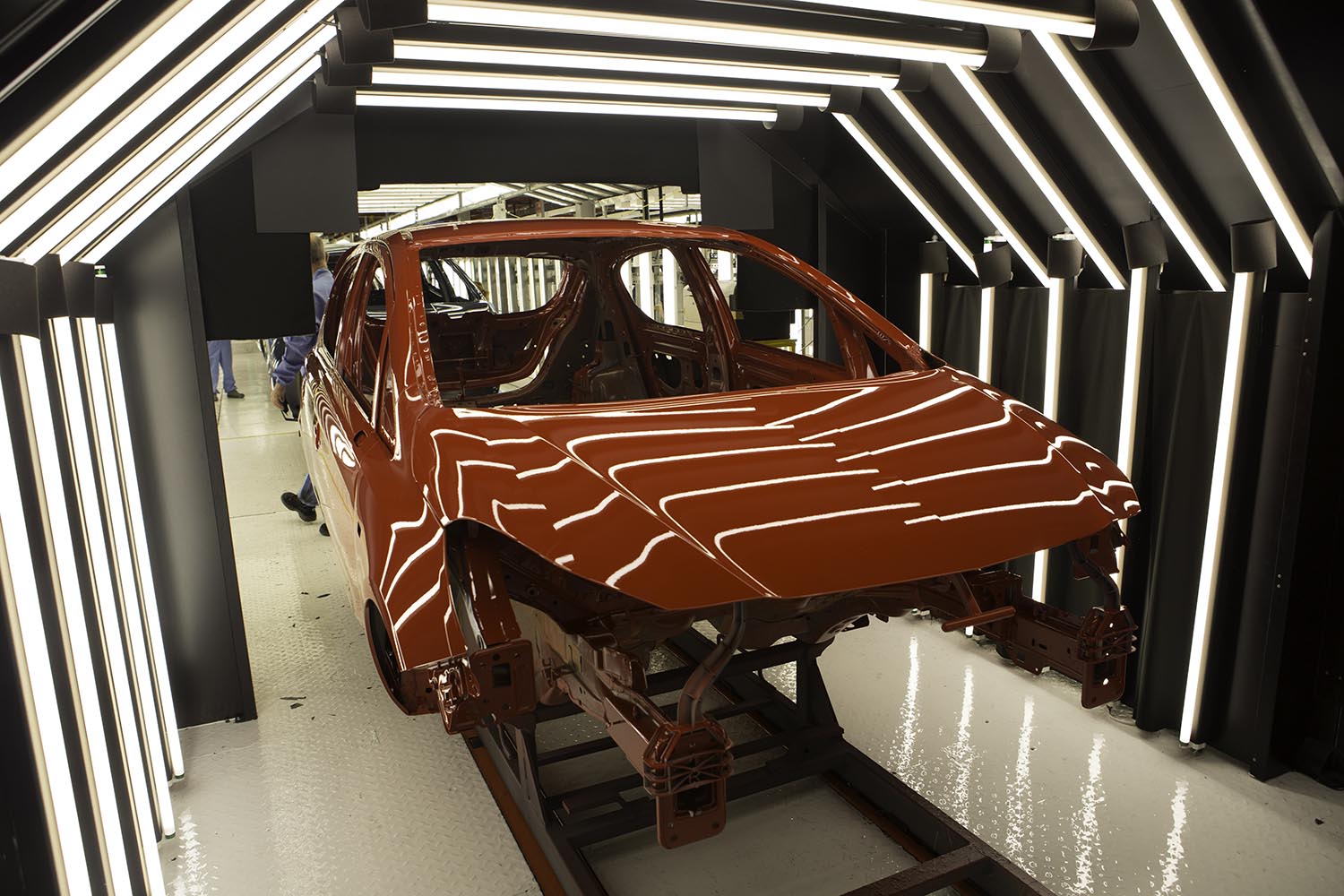
- Optimized lighting for matte finishes: Geometries and intensities adjusted to the diffuse behavior of the surface.
- Multichannel / Multispectral capture: (When applicable) to better separate texture, material, and contamination.
- AI-assisted detection algorithms: Trained specifically for low-visibility defects in primer layers.
- Advanced 2D analysis: For precise feature extraction.
This allows for:
- Distinguishing textures and transitions between correct application and irregularities.
- Detecting subtle defects that standard 2D systems fail to capture consistently.
- Adapting to primer tone variations, maintaining detection stability.
Automated defect detection without stopping the line
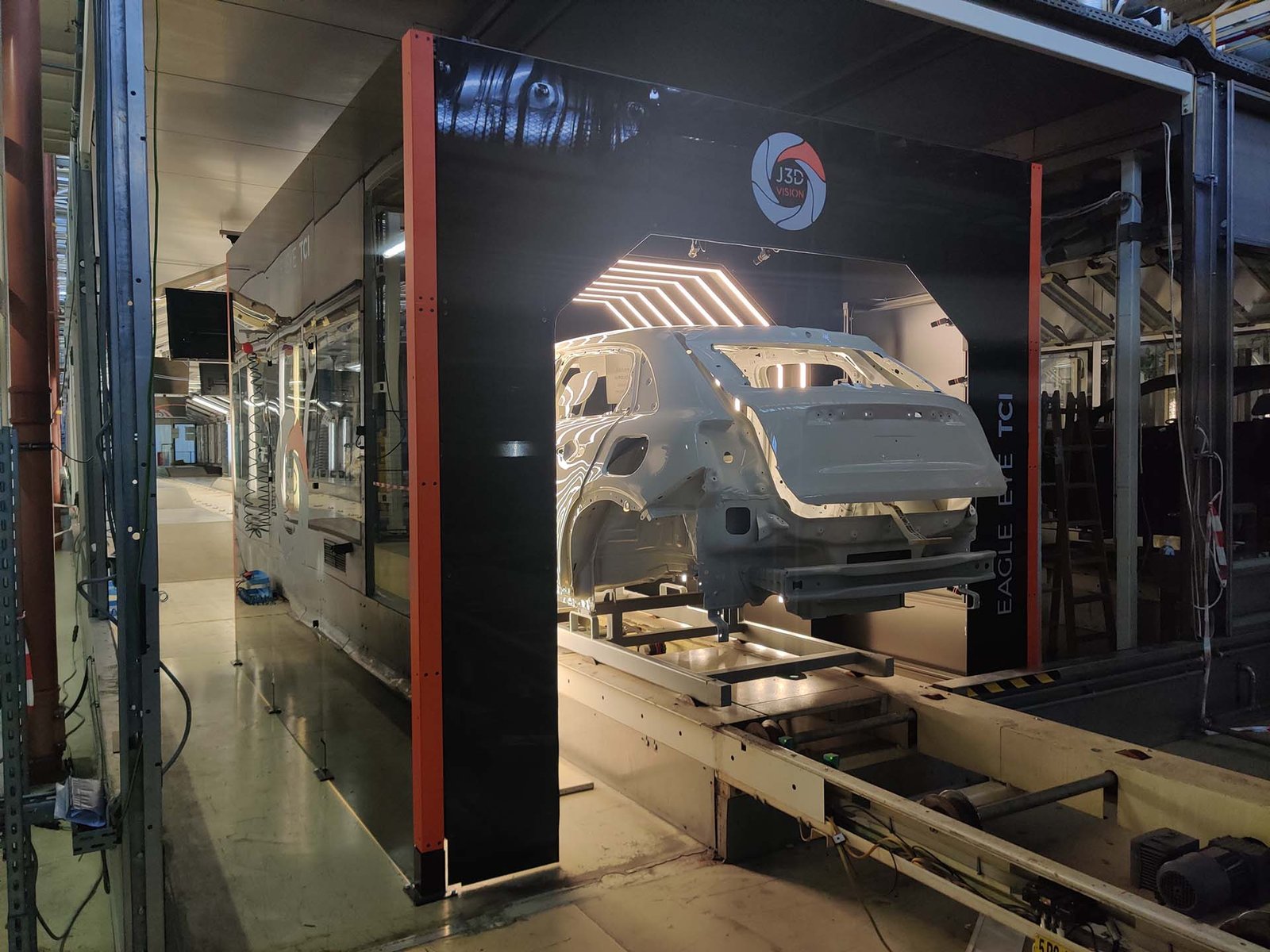
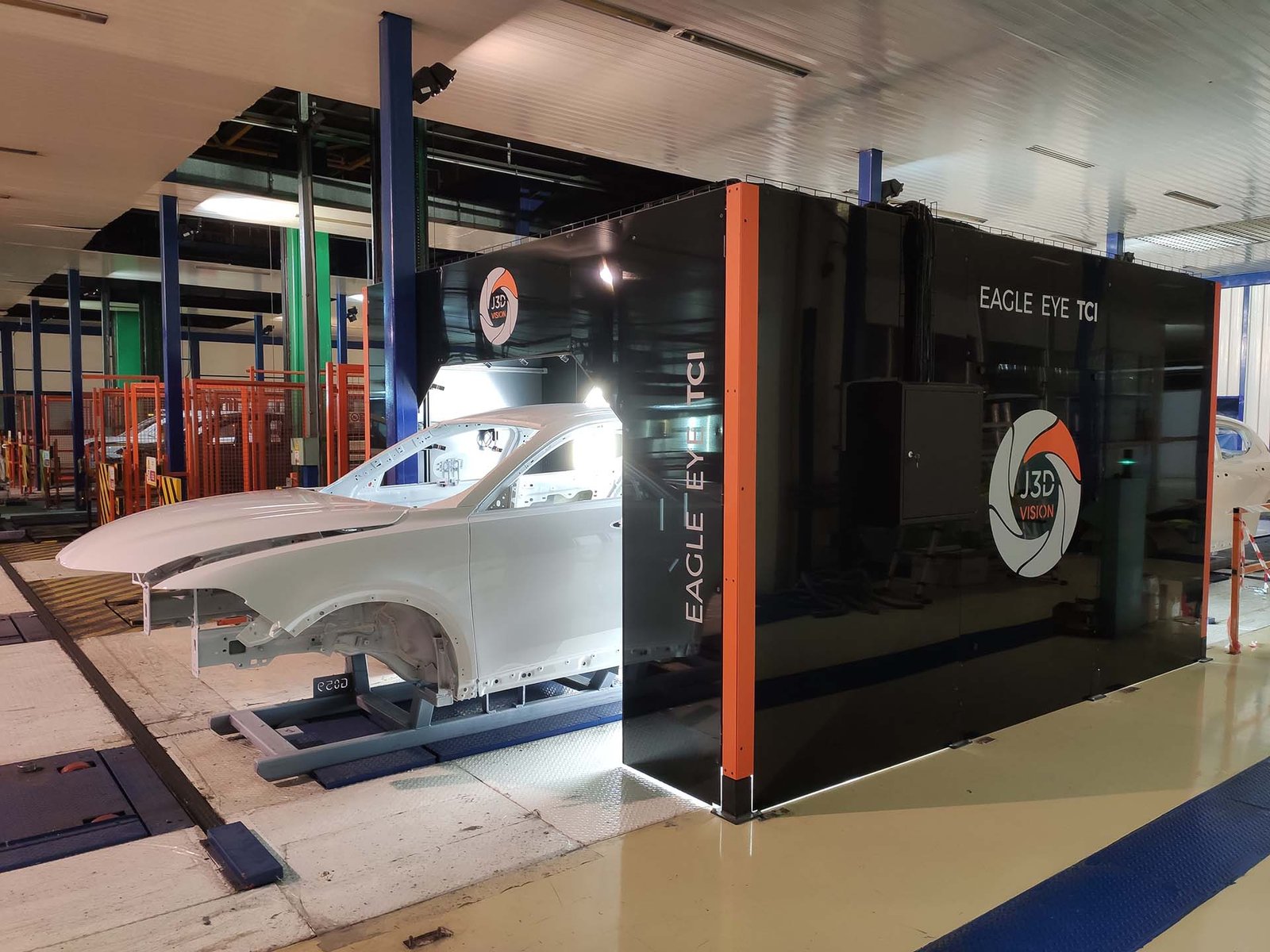
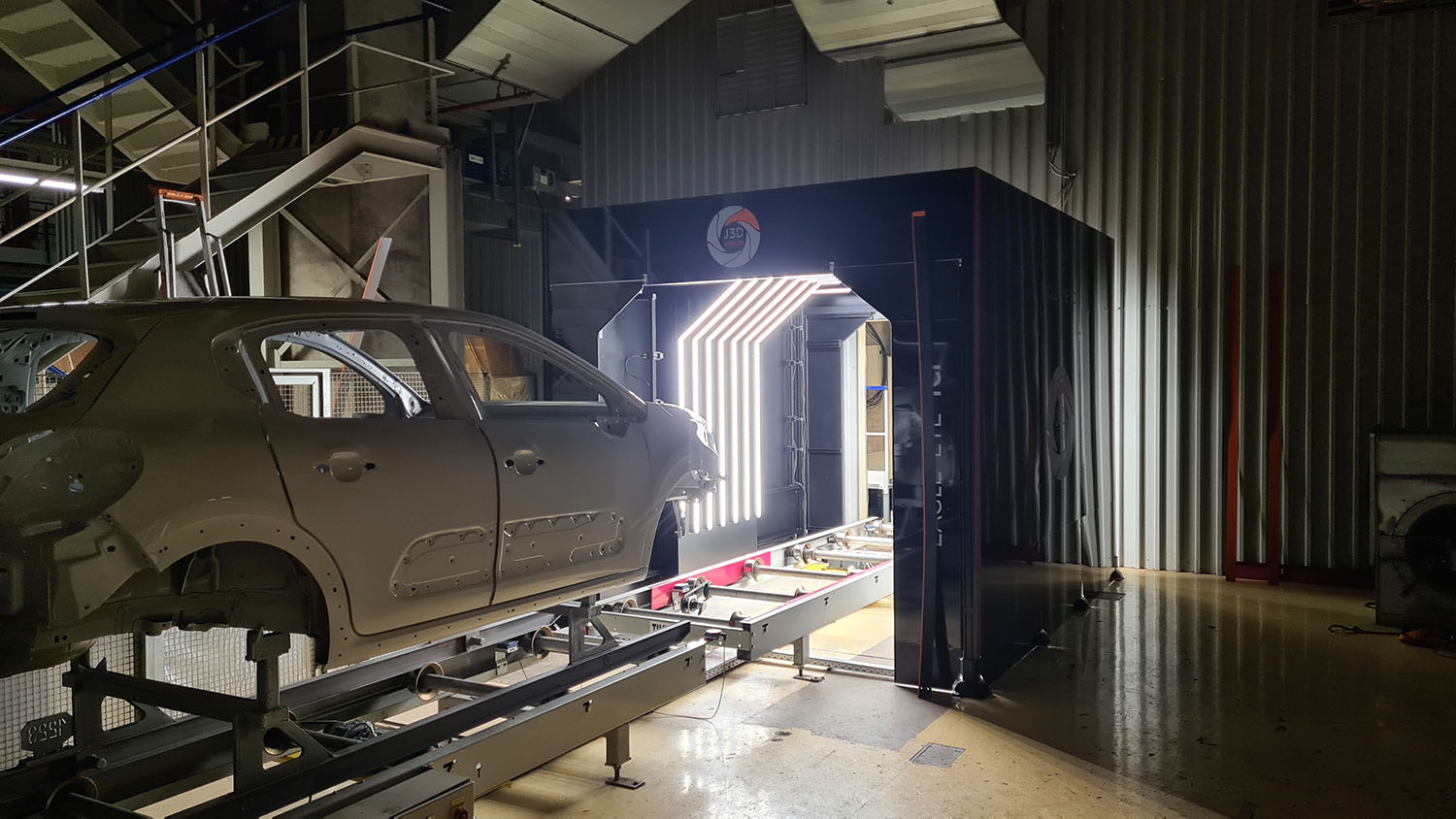
In paint lines, cycle time is decisive. Therefore, the system is designed for continuous inspection of car bodies in motion, eliminating the need for additional stops.
Powered by Eagle Eye technology, the system monitors production in real-time, automatically identifying typical primer defects such as:
- Pinholes, bubbles, and craters: Failures that compromise surface continuity and cause marks in later layers.
- Lack of coverage / Unpainted zones: Identifying where the substrate remains exposed or anti-corrosion protection is insufficient.
- Surface contamination: Particles, inclusions, or other detectable events based on the optical configuration.
Furthermore, every car body generates a traceable quality record linked to its production ID (e.g., VIN). This enables process improvement analytics and ensures traceability across the application phases of sealants, primer, and top coat. Early detection allows for intervention before the defect advances to the finishing stage, stabilizing the process.
With Eagle Eye technology, there is no need for conveyor stabilizers, which are required by other systems based on classical deflectometry. This makes our technology the most suitable in terms of detection, localization precision, and surface coverage.
Additionally, no moving parts or additional tunnels are required for tailgate inspection, which avoids increasing installation costs and simplifies both ROI and maintenance.ssues are corrected when the repair is fast and cost-effective, preventing a primer defect from reaching the final finish booth.
Industry 4.0: MES integration and full traceability
Beyond detection, operationalizing data is key. The system integrates with plant environments for:
- MES / Production system synchronization: Logging defects and events per unit.
- Automated reports and KPIs: Identifying trends, recurrences, application drift, and rework ratios.
- Historical analytics: Correlating defects with process variables (robot, recipe, shift, nozzle, etc.).
- Synchronization with other Eagle Eye tunnels (TCI, ECI, and UBI): For full traceability and combined inspection results analysis.
In terms of IT/OT, the system follows standard industrial security measures: network segmentation, access control, backups, and maintenance policies, aligned with client standards.
Economic impact: rework reduction and material optimization
Early primer inspection provides a direct return on investment through:
- Top Coat rework reduction: Preventing pieces with defective bases from advancing.
- Optimized material consumption: Through early detection of application deviations.
- Process stability: Less variability and fewer “surprises” at the end of the line.
- In-line operation: Non-stop inspection dimensioned to plant cadence (JPH) and layout.
The J3D vision inspection ecosystem for paint lines
Primer inspection is a vital link in comprehensive quality control. It integrates natively with other automotive machine vision solutions:
- ELPO / e-coat inspection: For anti-corrosion protection.
- Underbody Inspection: Covering sealants, chassis base, and water tightness.
- Final paint inspection (Top Coat): For a premium finish.
At J3D Vision, we design systems oriented toward the process, not just image capture and analysis. If you want to improve your paint line efficiency and reduce rework, we can help.
Ready to optimize primer and paint inspection in your plant?. 👉 Request a personalized demo