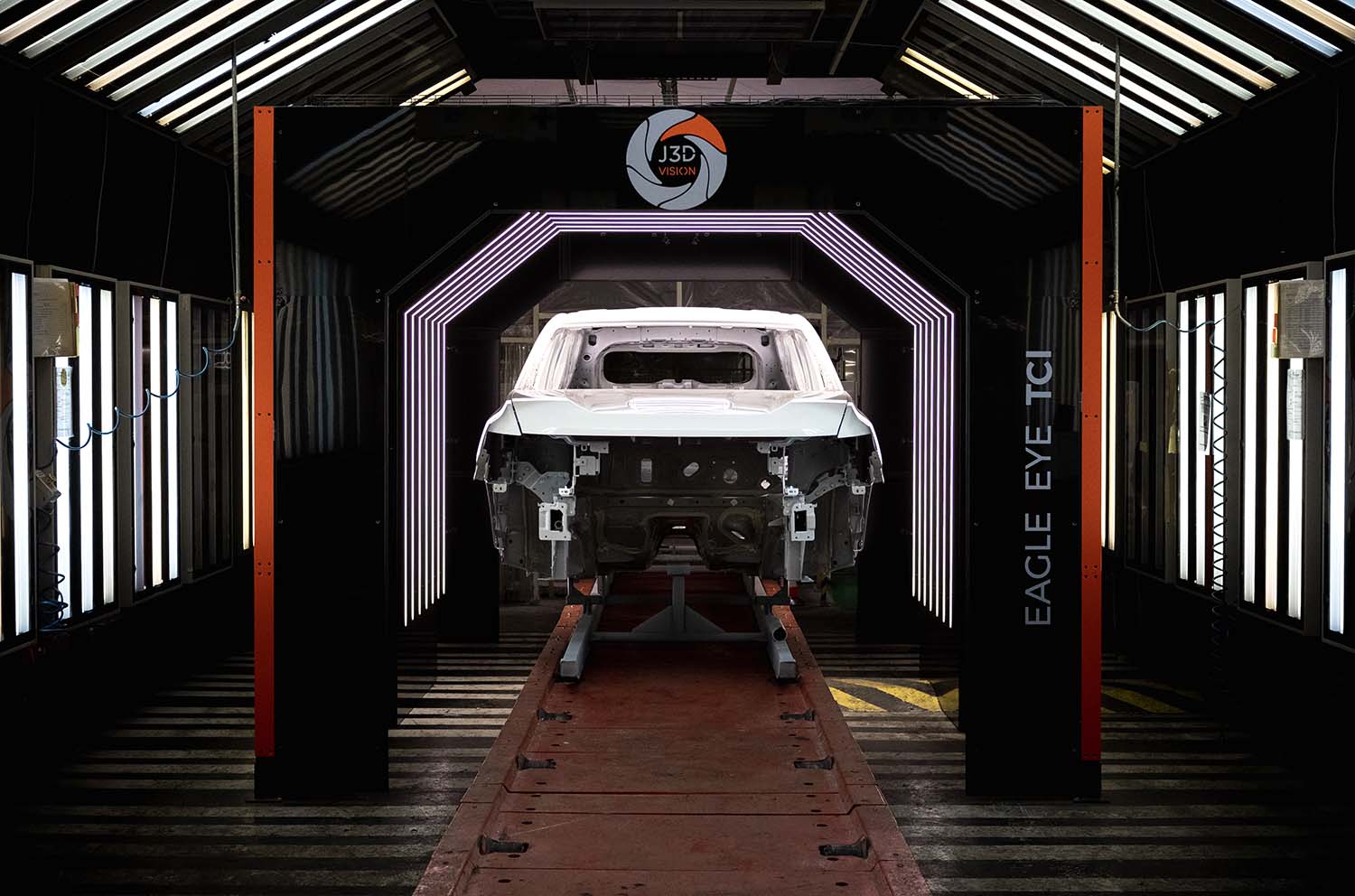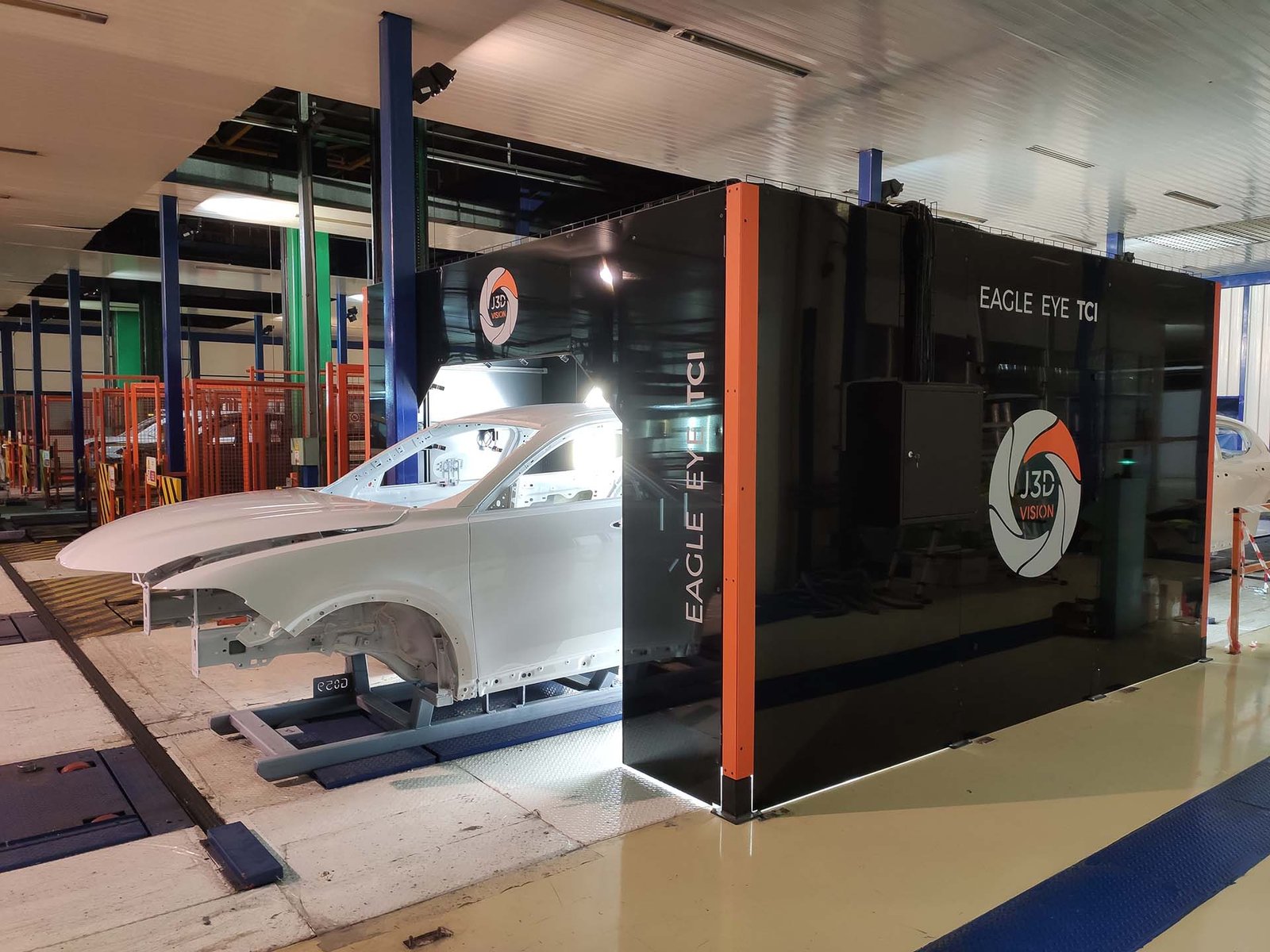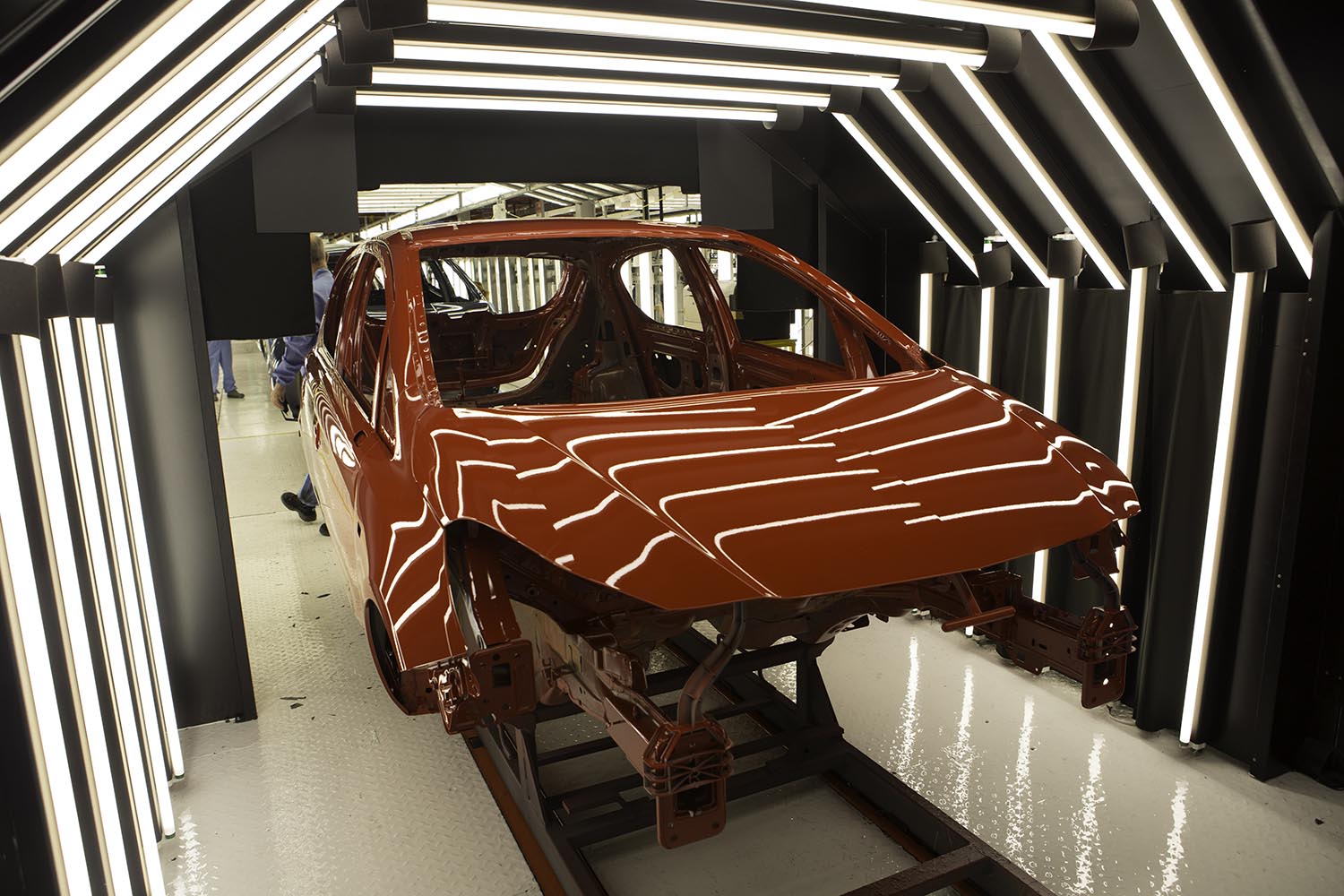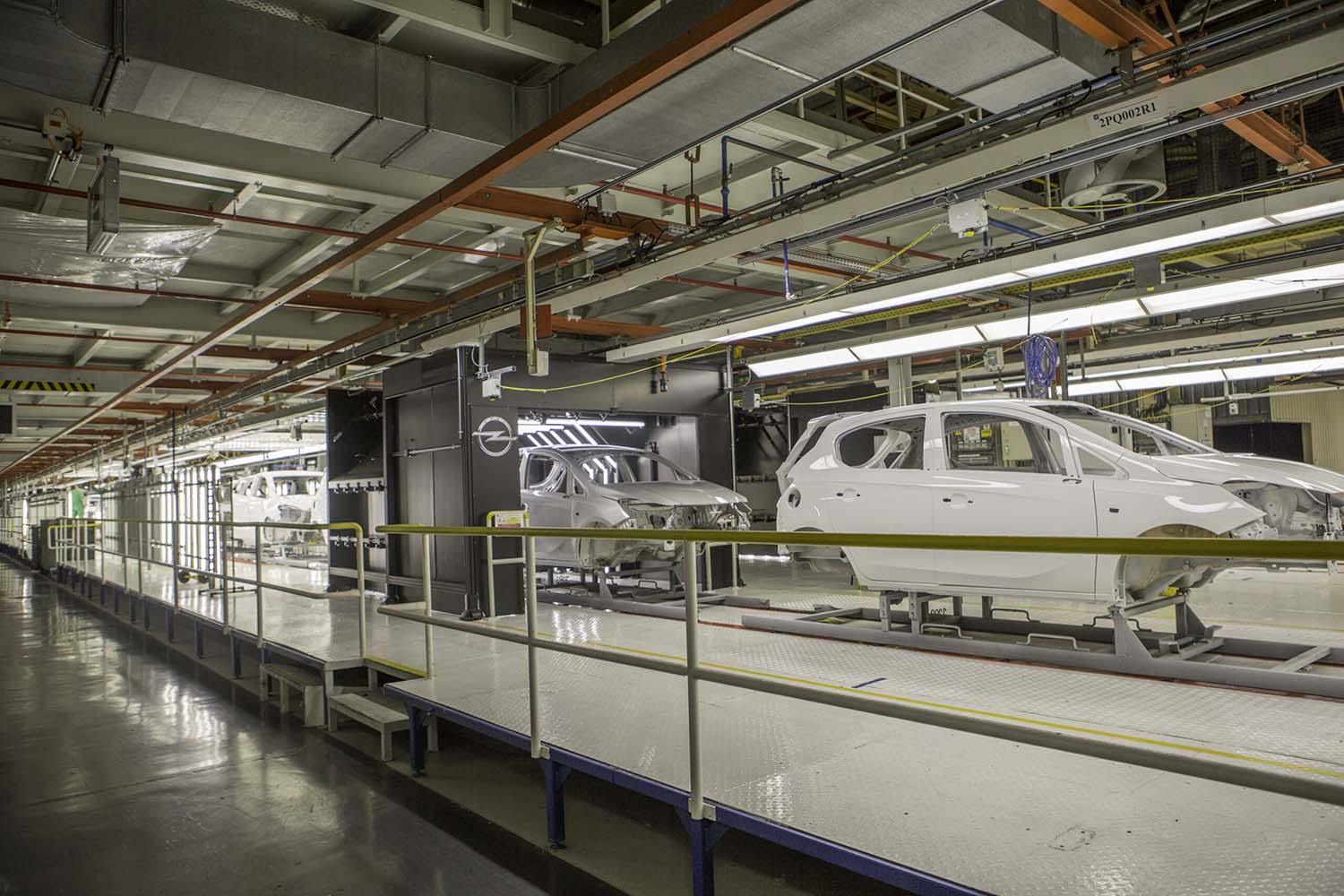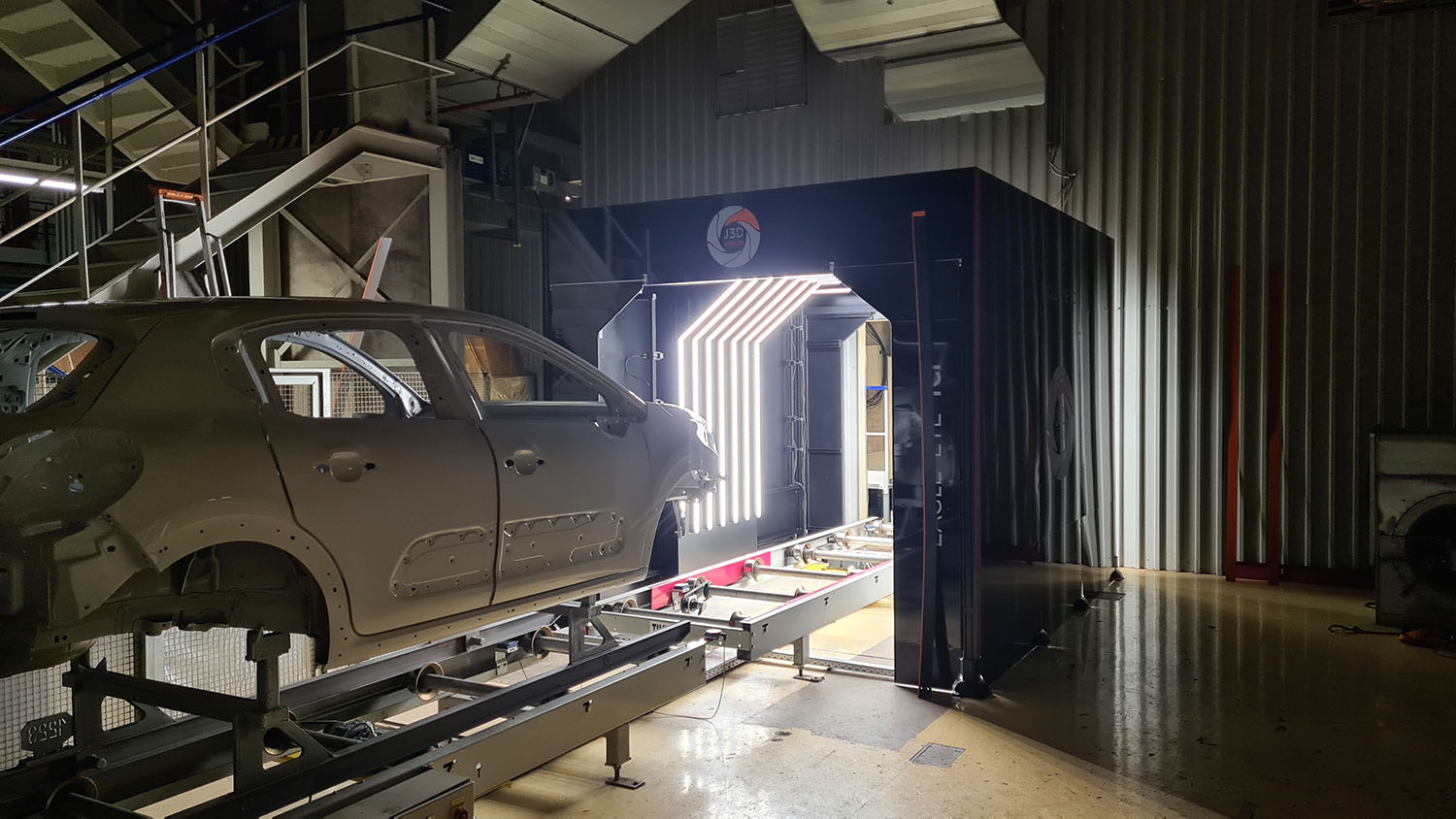
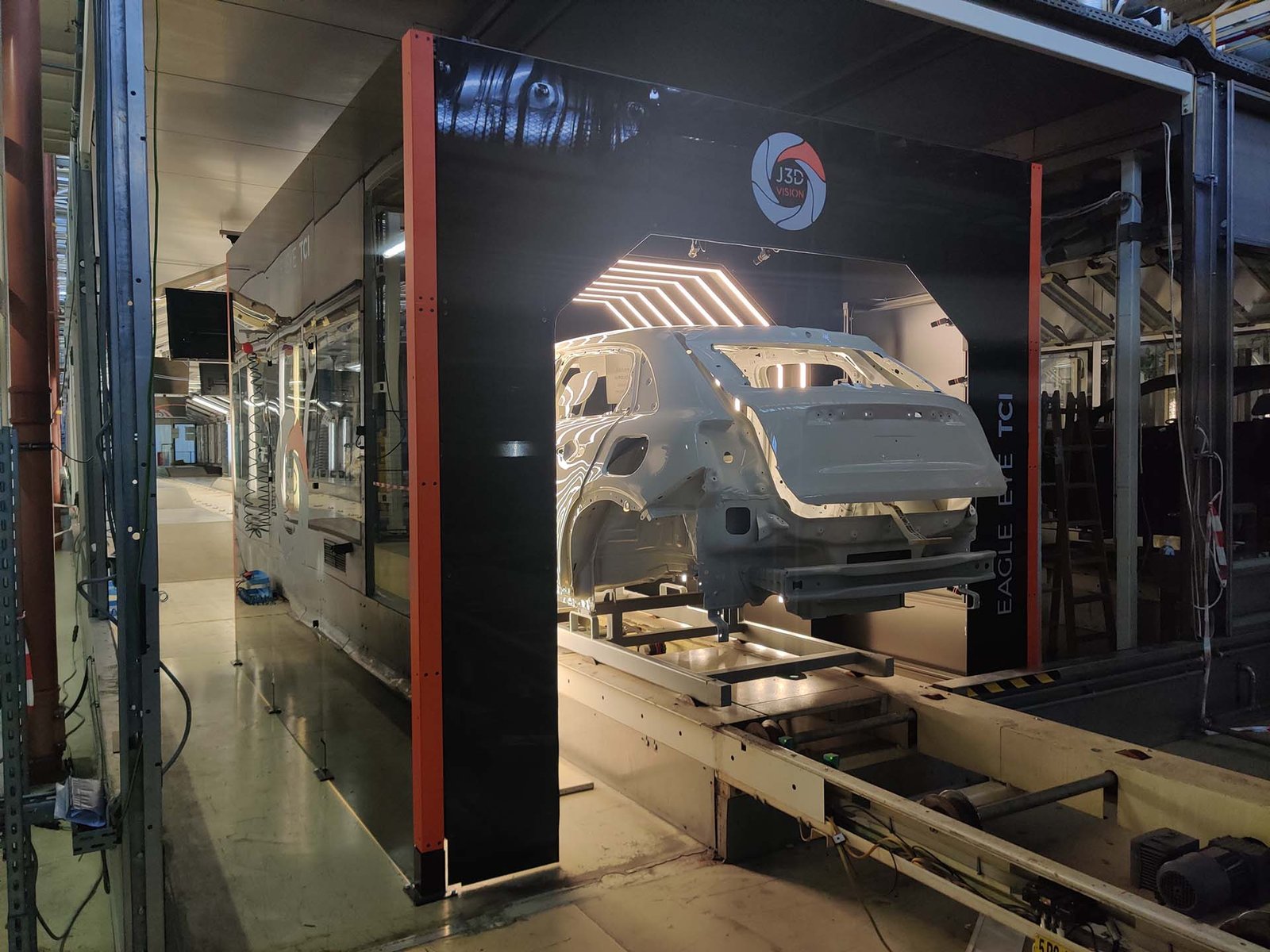
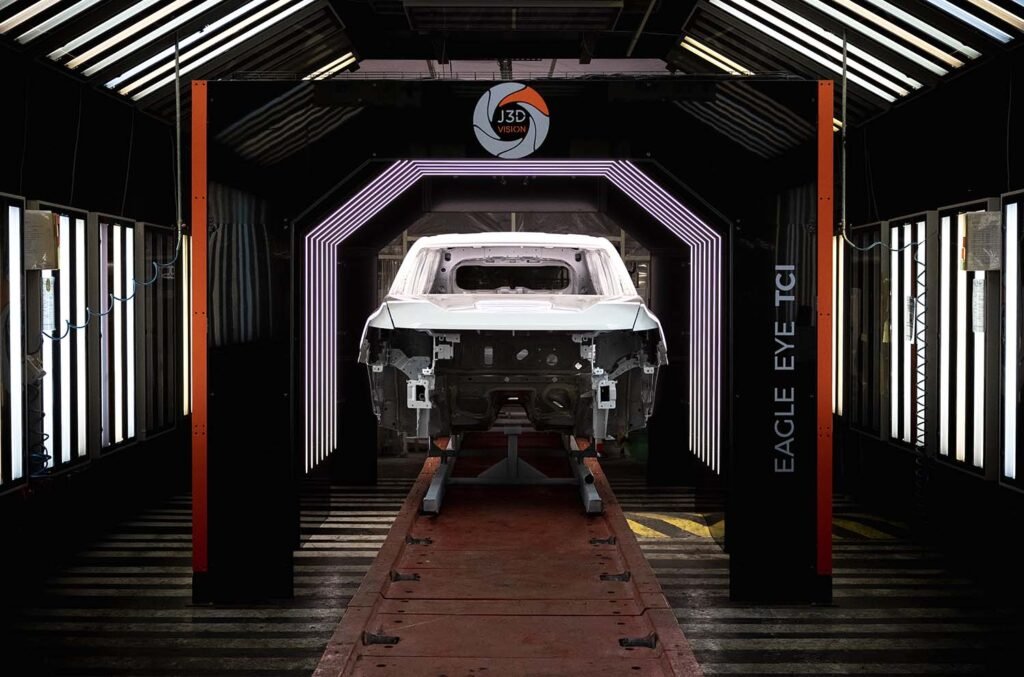
At J3D Vision, we build AI into paint lines through Eagle Eye — a system that combines industrial machine vision, optimized multispectral lighting and deep learning models trained on real production defects, not lab samples, to inspect car bodies in motion without slowing the line down.
None of that starts with the algorithm. Before deep learning can do anything useful, someone has to solve a harder problem first: getting a consistent image off a specular, semi-specular or matte surface at line speed. Get that wrong, and the smartest model in the world has nothing reliable to work with.
When the human eye stops being enough
A veteran inspector is still hard to beat at reading an unusual case. That was never really the issue.
The real issue is throughput: on a line running at 150 JPH, there’s only a few seconds per body. Nobody holds the same level of attention on inspection number 4,000 of a shift as they did on number four.
There’s also the defects that barely register — a hint of orange peel, a small inclusion, a faint gloss variation — and whether you catch them depends on the angle you happen to be standing at. AI doesn’t have that problem, because it works under the same conditions every time: no fatigue, no shift-to-shift drift, full coverage on every single body.
As a result, that crater thatslips past visual inspection on top coat and shows up as a warranty claim three weeks later is usually a coverage problem, not a skills one.
Training algorithms on real defects, not lab samples
A deep learning model never looks at the car body directly — it looks at images. Feed it reflections, dead zones or inconsistent contrast, and even a well-built model starts guessing.
So before any training happens, there’s an optical problem to solve: how do you capture stable, repeatable data across every finish type? A glossy top coat straight out of the booth behaves nothing like a post-ELPO surface, and a matte primer coat with low contrast needs its own lighting approach entirely.
The training itself runs on thousands of real plant images, with defects — craters, blisters, inclusions, orange peel, sags — labeled and validated against actual quality decisions, not synthetic ones.
From there the model learns to tell a genuine defect apart from an acceptable process variation, and it keeps learning: every new inspection, every confirmed or dismissed flag, feeds back in. A model trained once and left alone starts drifting the moment the paint batch changes or the plant floor temperature shifts with the season. One that keeps learning doesn’t.
This is exactly where Eagle Eye’s multispectral lighting earns its keep — it’s what makes that stable image possible on tricky surfaces in the first place. Without it, there’s nothing dependable for even the best-trained model to analyze.
See how we apply this to full in-motion inspection without stopping the line.
Automatic severity classification
Finding a defect is half the job. Deciding what to do about it is the half that actually saves money. A well-tuned system doesn’t just flag “defect / no defect” — it sorts by type, size, location and severity, and that’s what lets a plant automatically decide whether a body goes to rework, gets a minor cosmetic touch-up, or needs no action at all.
Skip that layer and every flagged defect, no matter how small, triggers the same alarm and the same manual review — which means quality teams end up spending time on issues that barely matter to the finished product. With automatic classification, that time goes where it actually counts, and every flag gets logged, which makes it possible to spot patterns and process drift over weeks and months instead of guessing.
That same data is also what connects inspection to repair: once the system knows what the defect is, exactly where it sits, and how severe it is, that information feeds straight into Hummingbird® to generate repair paths automatically — no second scan required.
Still deciding what goes to rework based on a visual check?
Request a demo and we’ll show you how to automate that call.
Machine learning on the production line
The difference between an AI system that’s installed and one that actually works day to day comes down to whether it keeps learning or just sits there. Paint batches change, a component supplier changes, the shop floor temperature shifts with the seasons — a frozen model starts losing accuracy the moment real conditions drift from training conditions.
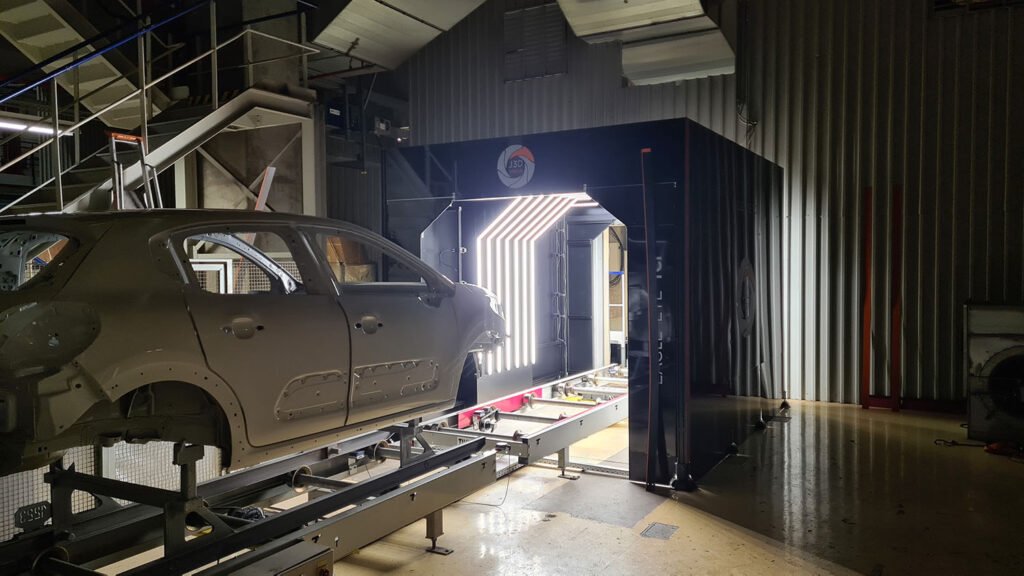
Eagle Eye is built for continuous production: since it doesn’t rely on a robotic arm scanning bodies one at a time, it can start inspecting the next body before it’s finished with the last one, which means it’s feeding the model a constant stream of data instead of isolated snapshots — something that matters a lot once a line is running at 150 JPH. That same architecture is also why one system can cover top coat, primer, ELPO and underbody sealing without retraining from scratch for every layer.
👉🏻 See how this plays out in a real high-cadence line in our Eagle Eye article.
AI doesn’t replace a quality engineer’s judgment — it hands them data that was never possible to collect at this speed and this consistently before. And in an industry where every point of lost OEE has a real, measurable cost, that gap between detecting, classifying and deciding is what separates a line that just gets by from one that competes.
Want to bring deep learning to your paint line without adding downtime or double inspections? Talk to our team and we’ll walk through your specific case.