For decades, the way a paint defect was handled on an automotive line looked almost the same everywhere in the world.
Along the production line, several operators carried out visual inspections of the car bodies to detect potential paint defects, in certain cases also resorting to tactile inspection. Once a defect was identified, and depending on its type, it was either repaired directly on the line or marked for later repair. On many occasions, both detection and repair were carried out without stopping the production line, while the car body kept moving forward.
That manual and deeply human process is the symptom of a problem that an automated inspection system is designed to solve at the root.
Below, we break down the core architecture of an automated quality inspection system, how it integrates across various automotive manufacturing stages, and why it represents the cornerstone for achieving zero-defect manufacturing.
What an Automated Inspection System Actually Is
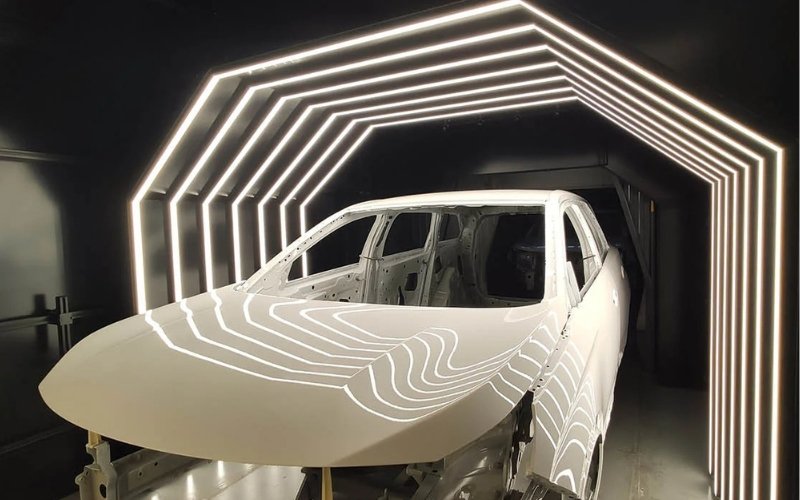
At its core, an automated inspection system is an integrated hardware and software ecosystem—combining industrial cameras, advanced illumination, and machine vision algorithms—that scans vehicle body surfaces to isolate paint defects without human intervention.
While that basic definition is straightforward, the true differentiator lies in how the system illuminates the surface, what it is capable of classifying, and above all, whether it requires stopping the production line to perform its scan.
Generally, market solutions fall into two distinct architectural families:
Robotic Inspection Systems
One family of systems relies on moving parts: a robotic arm or scanning head that travels around the body. These work, but they inherit every drawback that comes with mechanics — wear, scheduled maintenance, and a throughput capped by how fast that arm can physically move.
Inspection in Motion (Stationary Systems)
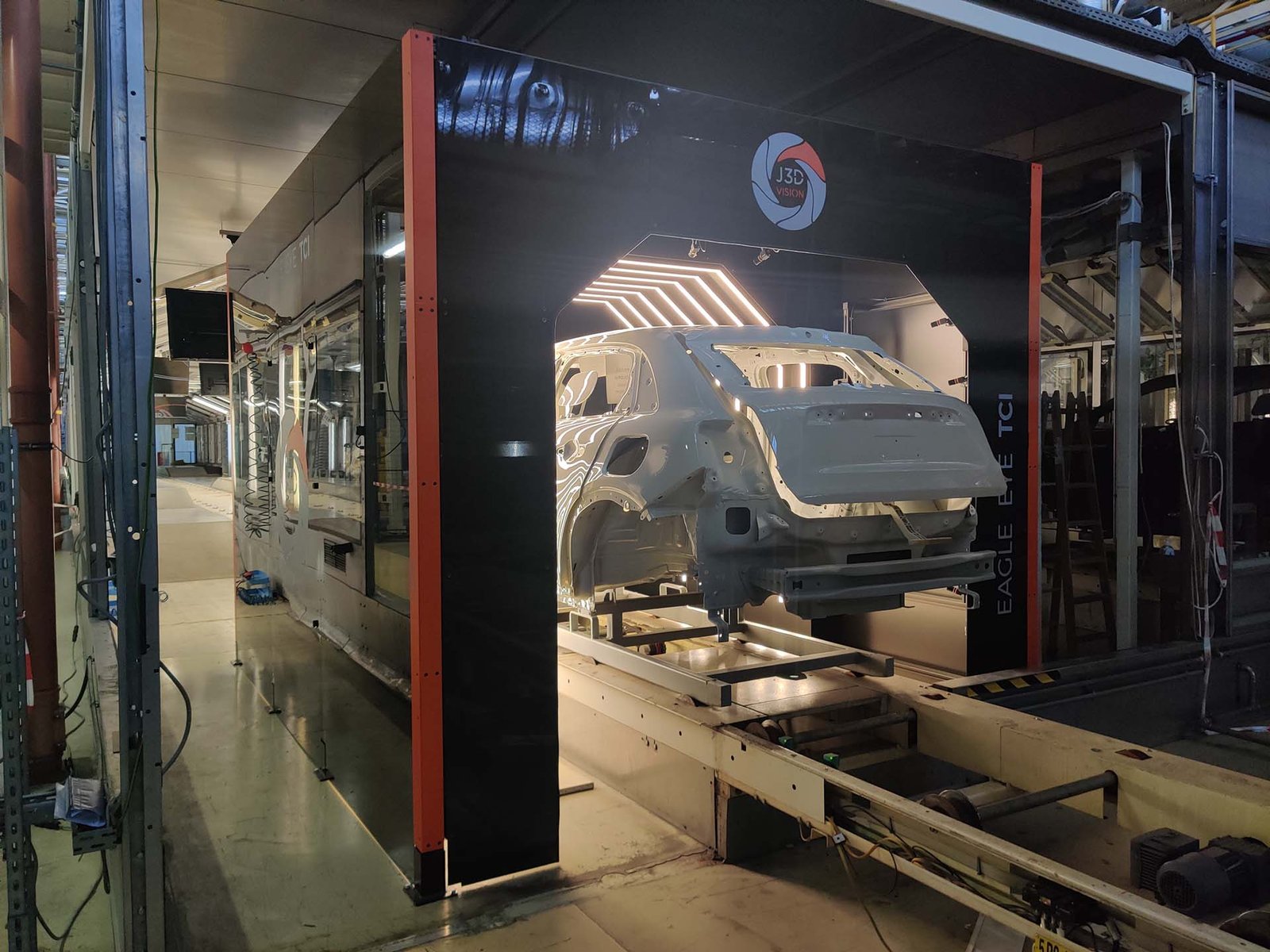
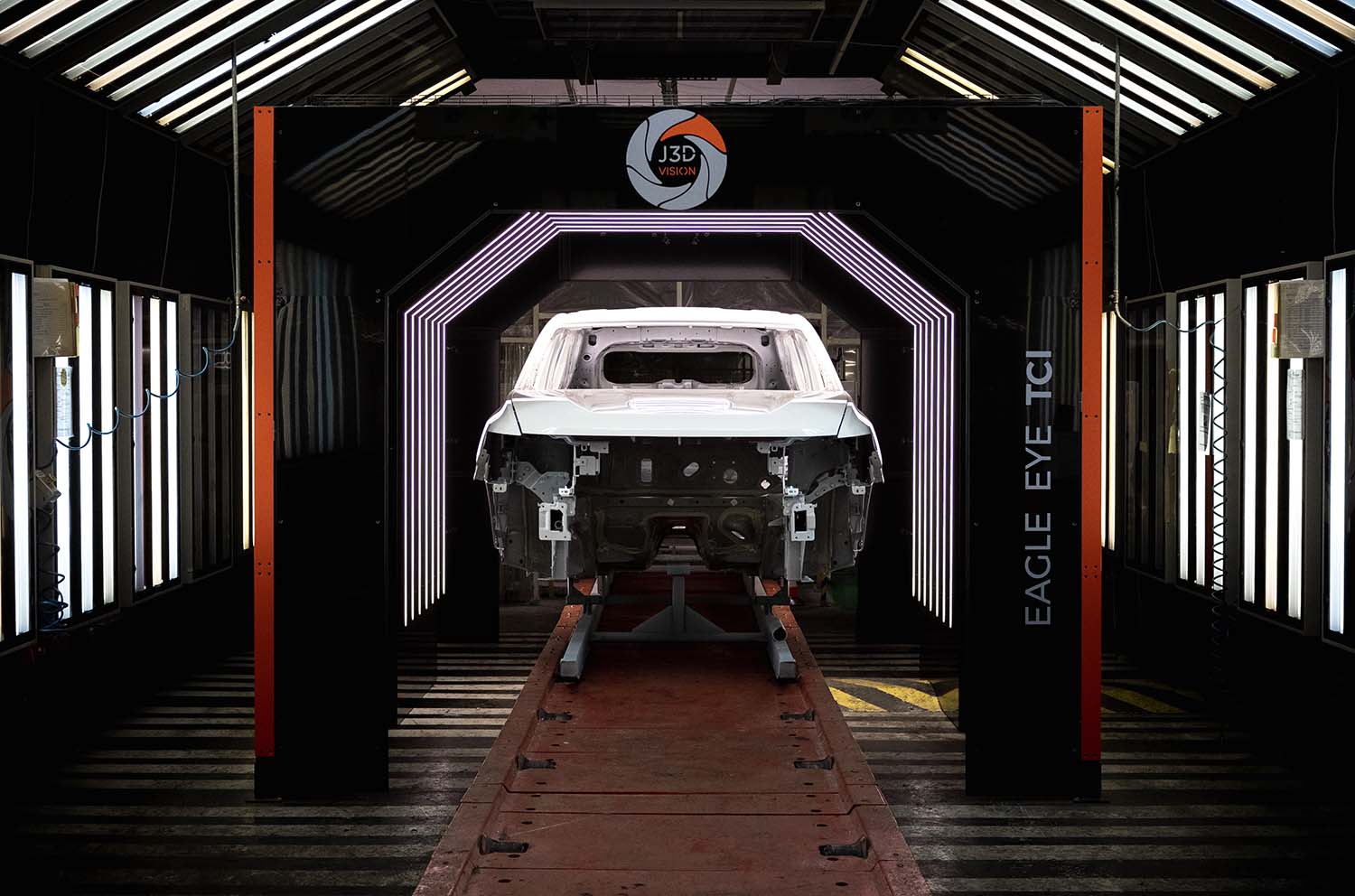
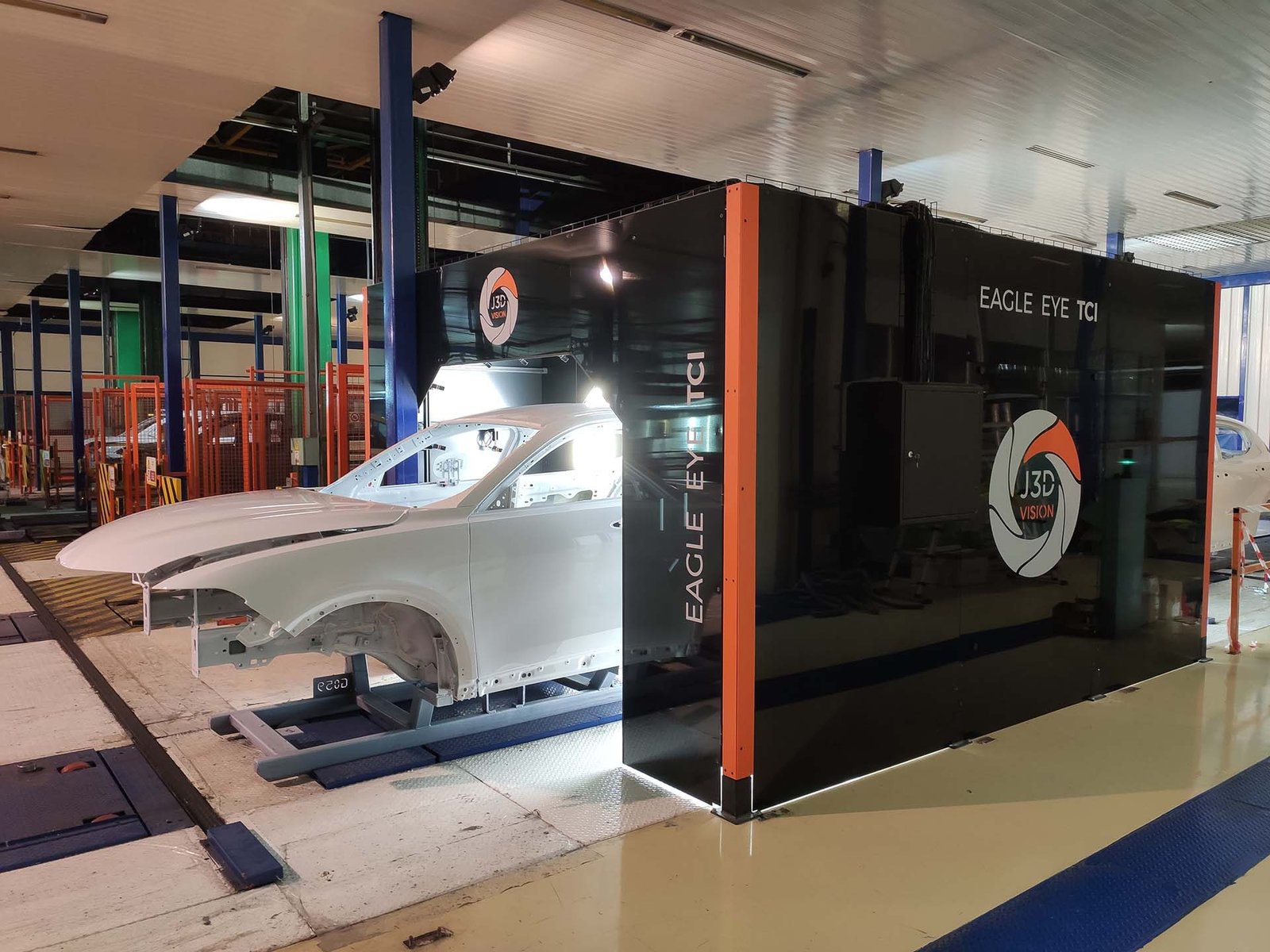
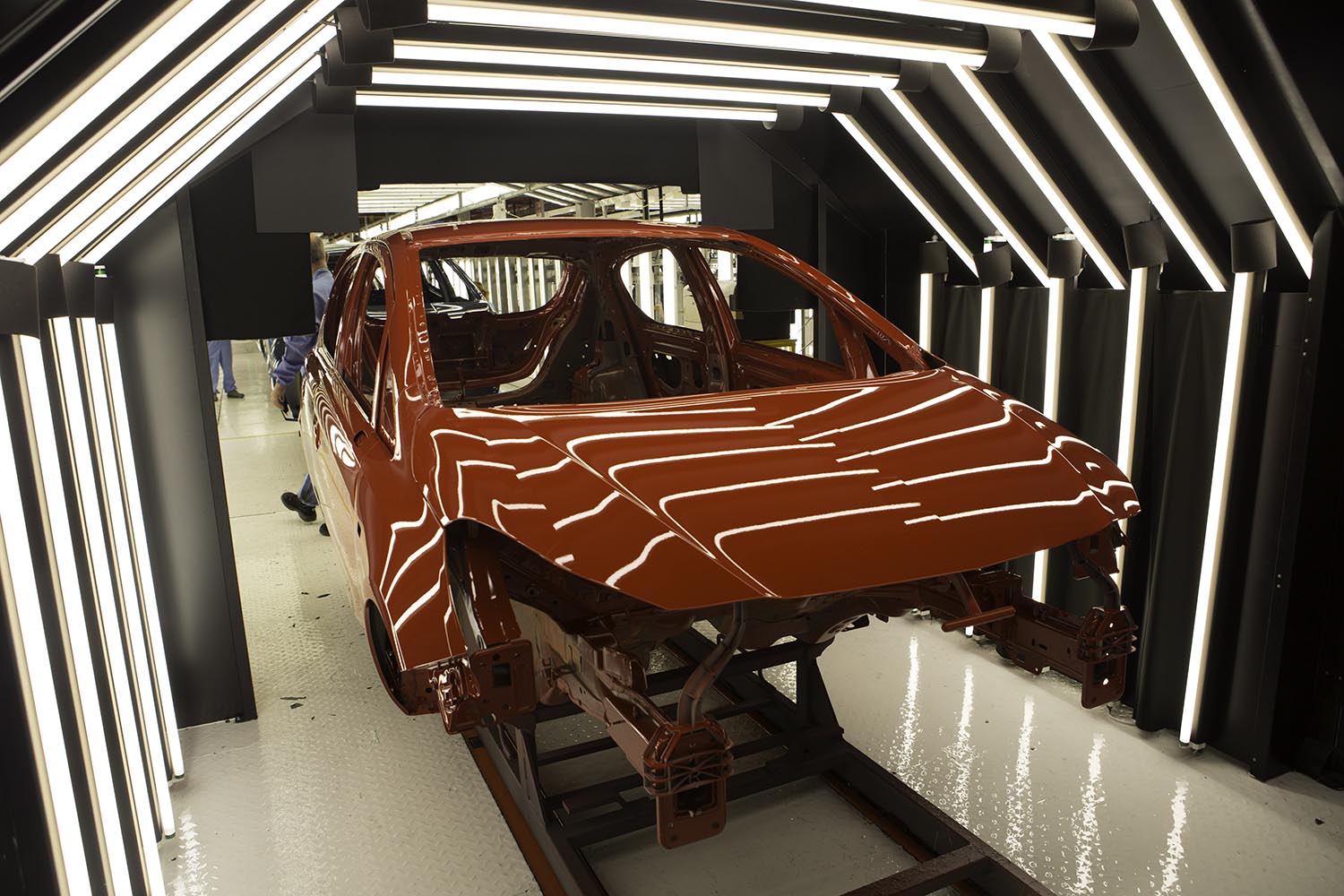
The other family has no moving parts at all. A fixed array of cameras and structured illumination covers the entire body as it travels down the line. That’s the philosophy behind Eagle Eye, our in-motion inspection system: zero wear, zero maintenance tied to movement, and an architecture that can start a new inspection before finishing the previous one — critical on lines running at 150 JPH (Jobs Per Hour).
That distinction -moving parts or none- is arguably the single most important question a quality director should be asking before evaluating any supplier, and we go into it in more depth in our guide to how 100% in-line inspection works on moving paint lines.
How an Automated Inspection System Operates Stage-by-Stage in the Paint Shop
Generic industry overviews often fall short because they treat automotive paint as a single, uniform coating.
On a real production floor, a vehicle body passes through at least four distinct quality checkpoints, and an automated quality inspection system must adapt its optical parameters to each specific surface condition.
1. Electrodeposition Coating Inspection (ELPO / E-Coat)
Following the cathodic electrodeposition coating (e-coat) dip tank, the car body receives the base layer that guarantees protection against corrosion and improves the adhesion of subsequent paint coats.
Deploying automated inspection gates at this stage is vital for isolating pinholes, thin spots, blisters, or chemical contaminants before the chassis enters the drying ovens. Rigorous evaluation via dedicated ELPO coating inspection for automotive corrosion protection prevents structural adhesion failures from compromising subsequent paint layers downstream.

2. Matte Base Layer Control (Primer Coat)
Applying the primer coat prepares the surface to receive color and levels small irregularities that may remain after applying the ELPO layer. In this stage, characterized by a matte finish, sensors must identify small particles of dirt adhering to the surface, sanding marks, sags, and other imperfections before applying the final finishing coats.
Automated detection is particularly demanding at this stage, as the matte surface presents optical characteristics that make defect identification more challenging compared to high-gloss finishes. You can explore this application further in our dedicated article on matte paint defect control and primer coat inspection.
3. High-Gloss Final Finish Auditing (Top Coat)
The final finishing stage comprises two layers: the color coat and the clear coat. This phase is particularly demanding from the perspective of quality perceived by the final customer, as any surface imperfection can directly affect the visual appearance of the car body.
Inspection here requires controlling high surface reflectivity to detect, measure, and classify complex defects such as orange peel, craters, spitters, dings, or embedded lint.
A system engineered specifically for automated car paint defect inspection guarantees that only units strictly meeting geometric aesthetic standards proceed to the assembly shop.
4. Underbody and Sealer Bead Verification
Quality control extends beyond visible exterior A-surfaces. The underbody area also requires verification of critical components and applications, such as the continuity and correct positioning of PVC sealer beads, the presence and proper placement of adhesives and plugs, as well as the correct application of the anti-gravel coating.
Targeted solutions for underbody inspection and assembly error prevention secure habitability seals and acoustic insulation performance before final trim assembly.
Want to verify if your current line layout supports non-stop inline inspection?Request a personalized demo with our engineering team to evaluate your plant specifications.
From detection to repair: closing the loop on defects
Here we reach a operational reality that many manufacturing facilities discover late in the integration process: identifying a surface defect is only half the battle.
Once the automated inspection system identifies a defect, operators receive the information through screens installed along the line, portable devices, or printed documentation. Based on this data, they must physically locate the defect on the car body, evaluate whether it can be repaired, and, when applicable, carry out the repair, usually while the car body continues in motion.
This transition between automated detection and manual intervention requires additional time in the process, partially reducing the time savings achieved through inspection automation.
At J3D Vision, we treat inspection and repair as a unified closed-loop ecosystem rather than isolated silos.
Eagle Eye detects and categorizes the anomaly by severity and precise 3D spatial coordinates on the vehicle body. This location matrix feeds directly to Hummingbird®, our intelligent automated paint defect repair solution. The platform automatically generates the precise robotic sanding and polishing trajectory without requiring a secondary re-scan or human intervention.
As a result, the time elapsed between “defect detected” and “defect corrected” is significantly reduced, decreasing both the need for and the time associated with rework processes.
If your plant is specifically focused on reducing the financial overhead of end-of-line touch-ups, dive deep into our strategy guide on automotive rework reduction through early defect detection.
The Gold Standard for Zero-Defect Automotive Manufacturing
Transitioning to an automated inline inspection architecture across paint and assembly shops has evolved from a marginal process improvement into a fundamental requirement for plant competitiveness.
Integrating high-resolution optics, advanced illumination, and edge-computed AI into your line layout protects overall plant OEE, eliminates manual rework costs, and locks in unyielding, objective quality for every chassis rolling off the line.
If you are ready to evaluate how an inline automated inspection system integrates into your plant’s specific cadences, conveyances, and MES software, our engineering team is at your disposal.
Ready to see how automated inspection performs on your moving production line? Contact our engineering team to request a personalized demo of our inline systems.