In the automotive industry, the quality of a vehicle’s paint finish is more than aesthetics—it directly influences durability, customer satisfaction, and brand reputation.
A single paint defect can trigger expensive rework, slow down the paint shop process, and ultimately impact profitability.
Traditional manual inspection can’t keep up with modern production lines. Speed and precision are critical, and human inspectors often miss tiny defects that can affect the entire batch.
That’s why automated paint inspection systems based on advanced machine vision have become essential for manufacturers looking to eliminate car factory paint defects and achieve a flawless finish 24/7.
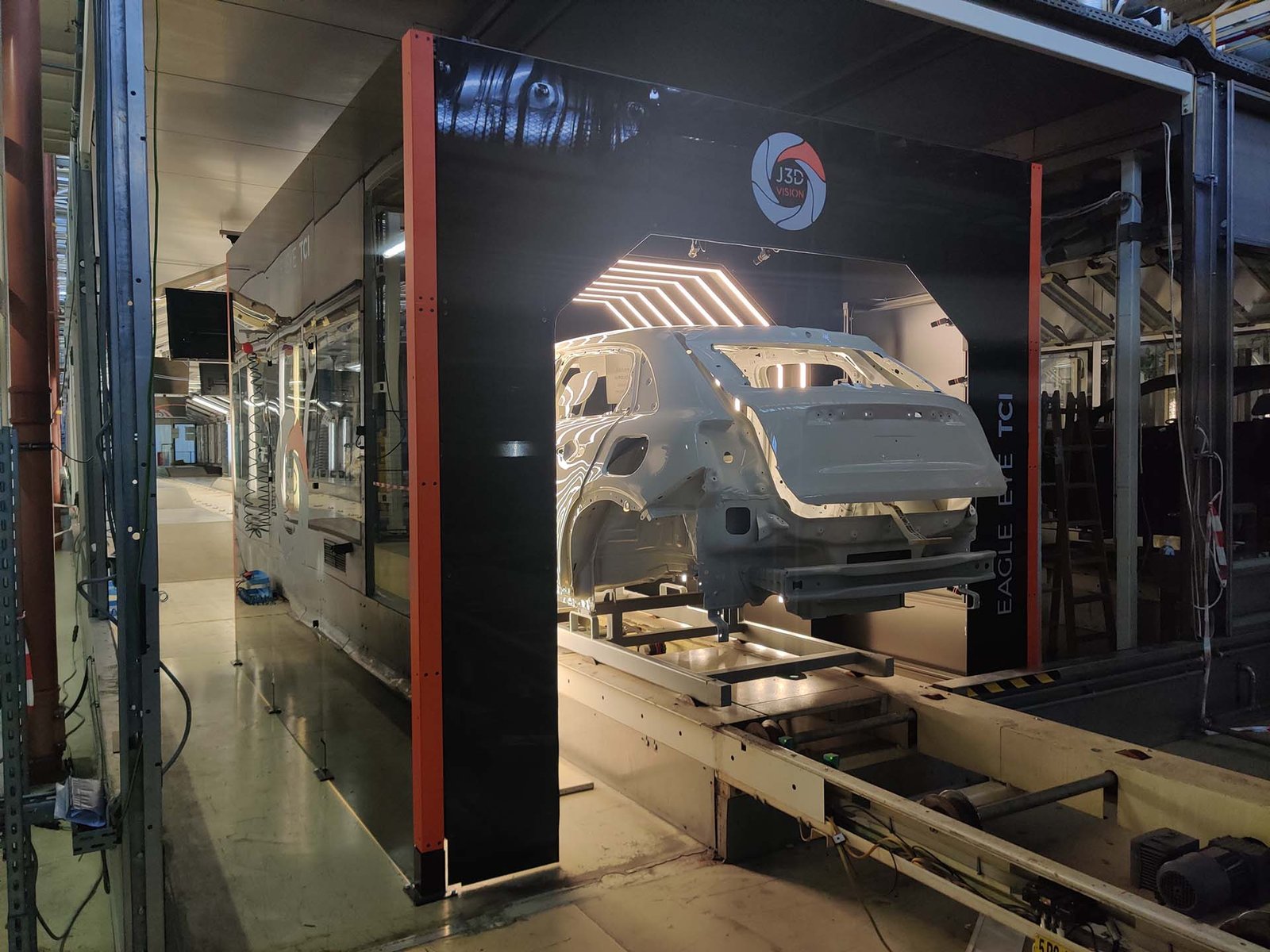
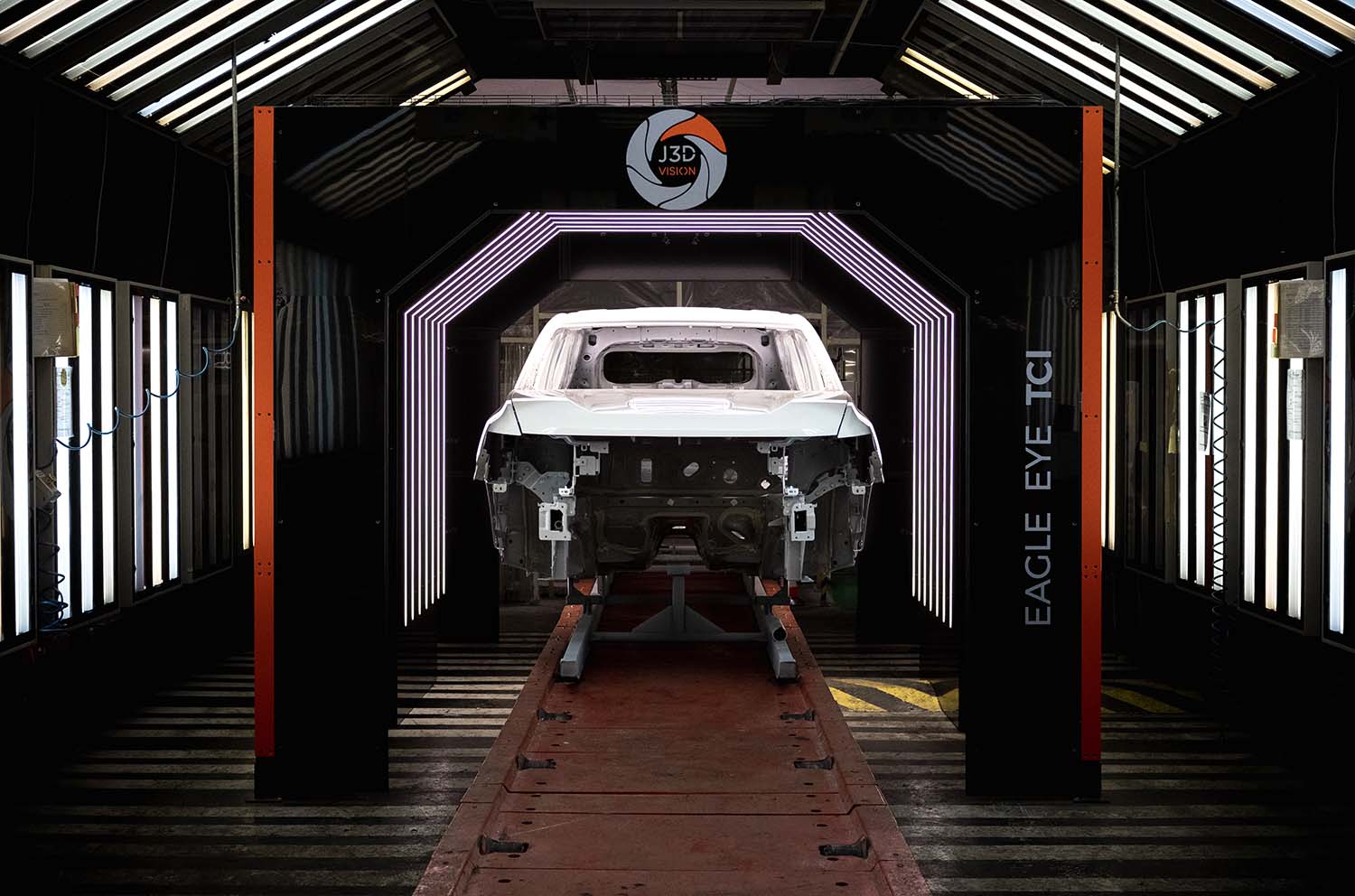
J3D Vision designs precision systems that detect micro-defects—sometimes invisible to the human eye—without stopping the car as it moves along the line.
Below, we break down how this technology works and why leading automotive plants are moving toward full automation in their paint inspection process.
Why is automated inspection key in the automotive industry?
Manual inspection introduces three major limitations:
- Inconsistency: Human criteria vary from operator to operator.
- Limited visibility: Micro-defects, low-contrast marks, or issues on glossy surfaces often go unnoticed.
- Slow cycle times: Visual inspection becomes a bottleneck in high-throughput production.
Automated inspection changes the equation:
- Early defect detection: Defects are caught before moving to the next stage.
- Consistent quality: Every car is inspected the same way.
- Efficiency gains: Fewer reworks and less reliance on manual inspectors.
In an industry where the painting process represents one of the most time-consuming and expensive areas of production, automation offers measurable ROI within months.
How Top Coat automated inspection works
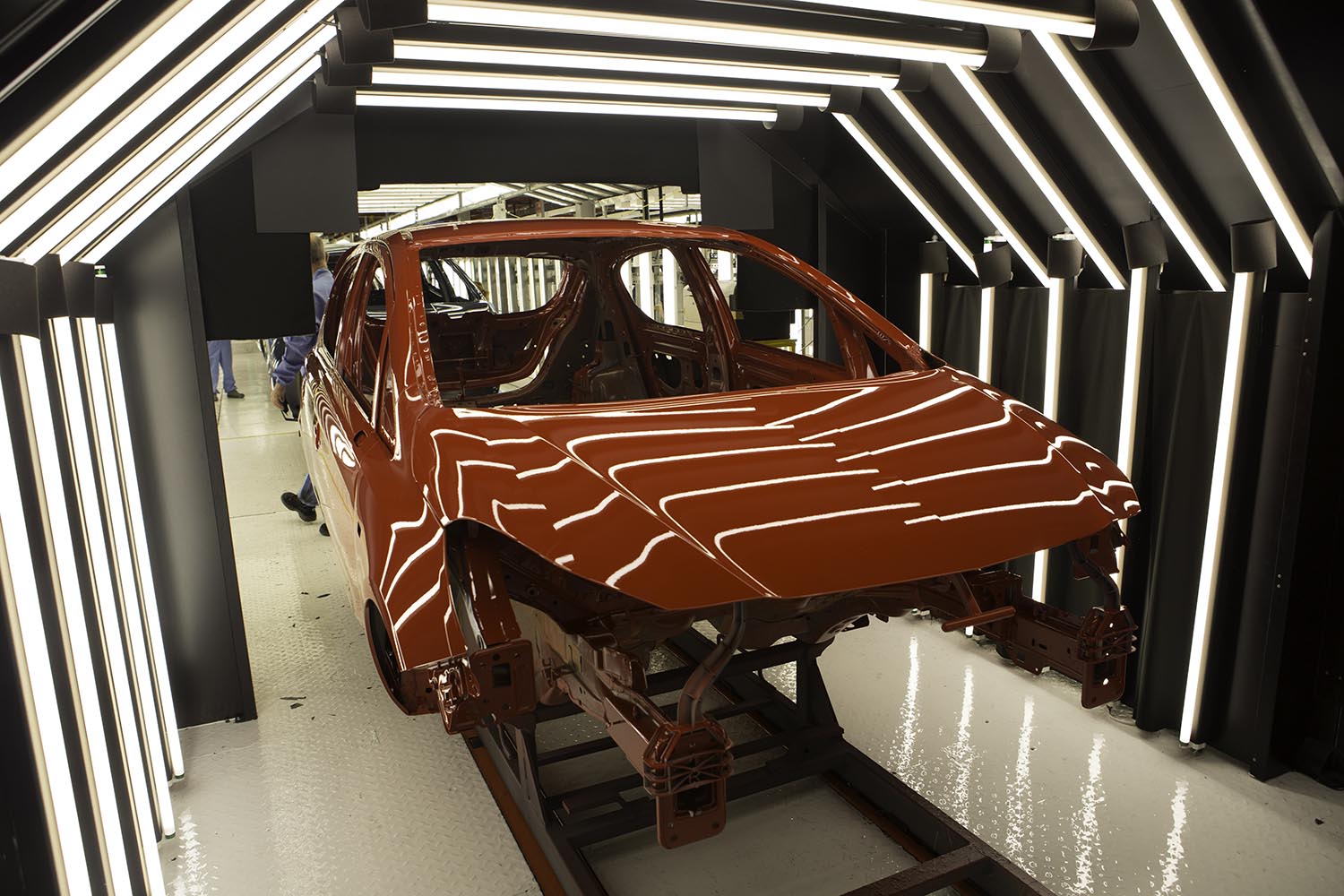
The top coat is the visible, glossy layer that defines the car’s final appearance. It’s also the most sensitive to defects. Detecting issues at this stage prevents costly repaints and protects the manufacturer’s brand image.
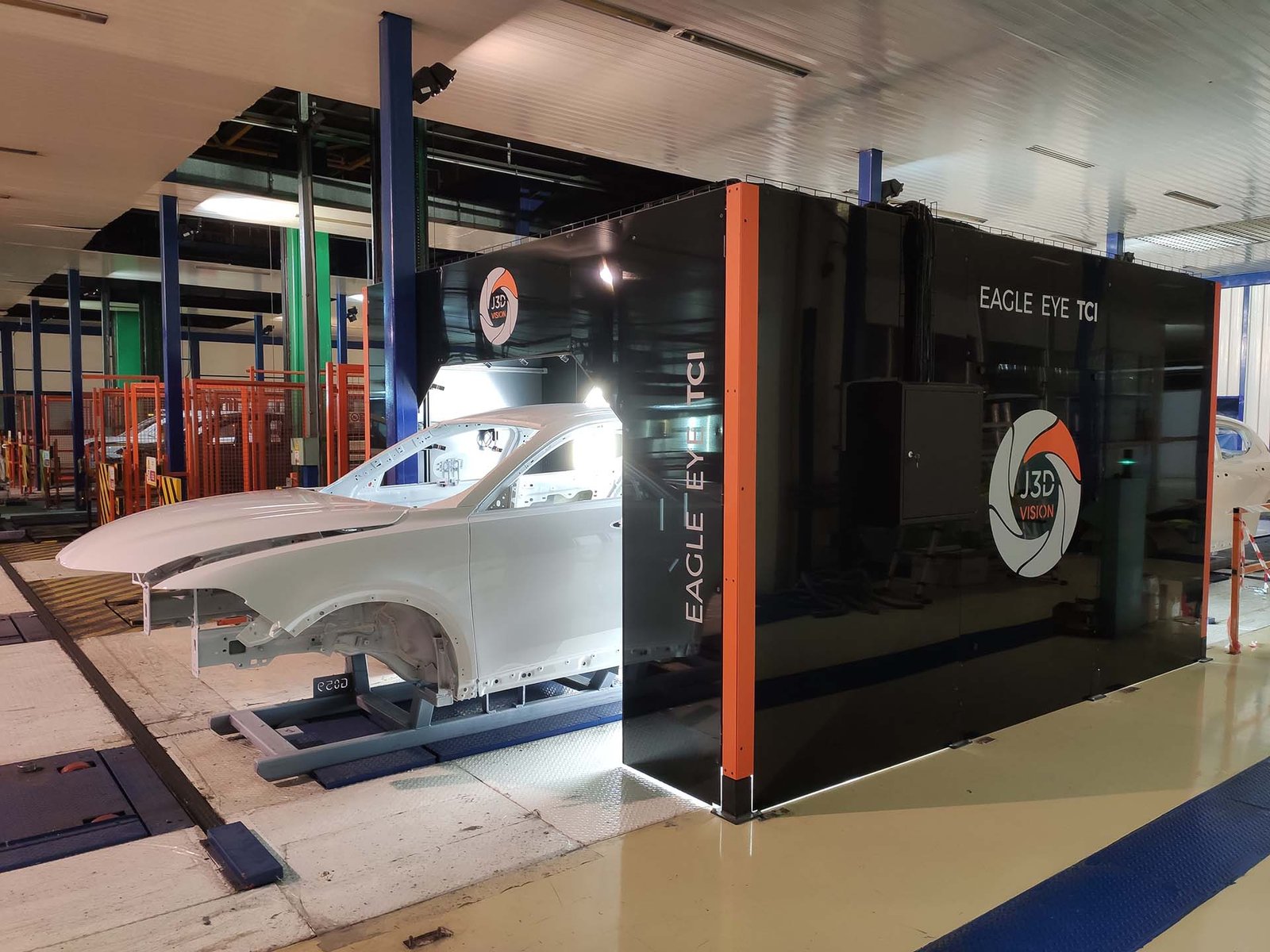
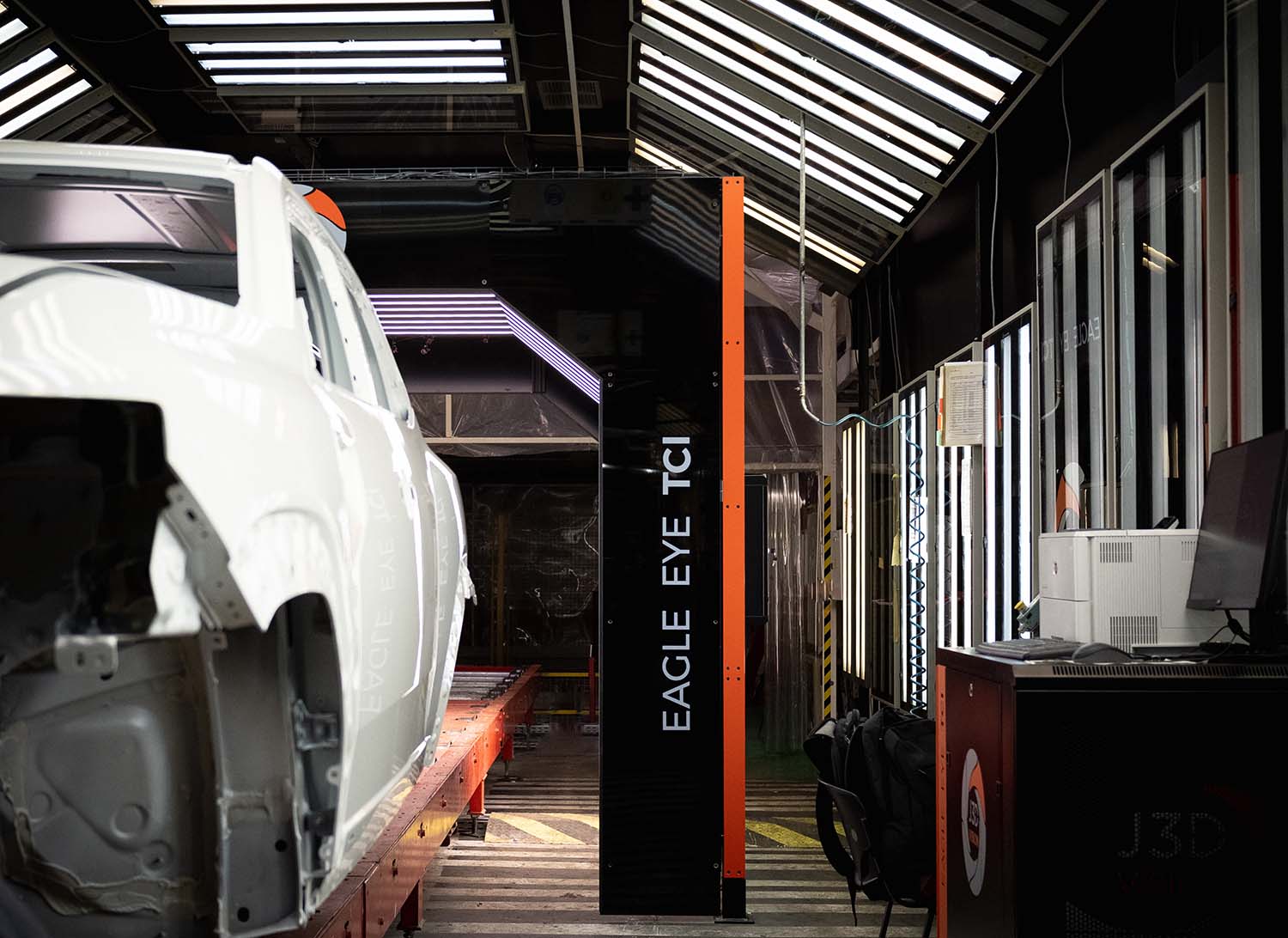
J3D Vision’s Eagle Eye System is engineered to handle the most demanding conditions found in automotive paint shops.
Core capabilities:
- Detects defects in real time, including drops, dust, bubbles, orange peel, and areas with missing paint.
- Uses multispectral lighting to inspect glossy, multi-color, or special-finish surfaces.
- AI classifies defects by type and severity, helping quality teams decide on fixes faster.
- Complete traceability with images and data for analysis and process improvement.
This approach enhances both car inspection accuracy and paint shop efficiency, reducing cycle time and ensuring a consistent high-quality finish.
Benefits of automatic Primer Coat inspection
The Primer Coat—a matte base layer—plays a crucial role in adhesion, durability, and corrosion protection. Although defects here are less visible, they often evolve into noticeable Top Coat problems if not addressed early.
With automatic Primer Coat inspection, manufacturers gain:
- Detects invisible defects like micro-cracks and uneven coverage.
- Ensures optimal Top Coat application, improving color and gloss consistency.
- Continuous in-line inspection keeps production running smoothly, even at high speeds.
These advantages make primer coat inspection essential for plants seeking to eliminate painting defects and improve their overall inspection automotive processes.
Success stories in automotive plants
J3D Vision’s systems are already deployed in some of the most demanding production environments:
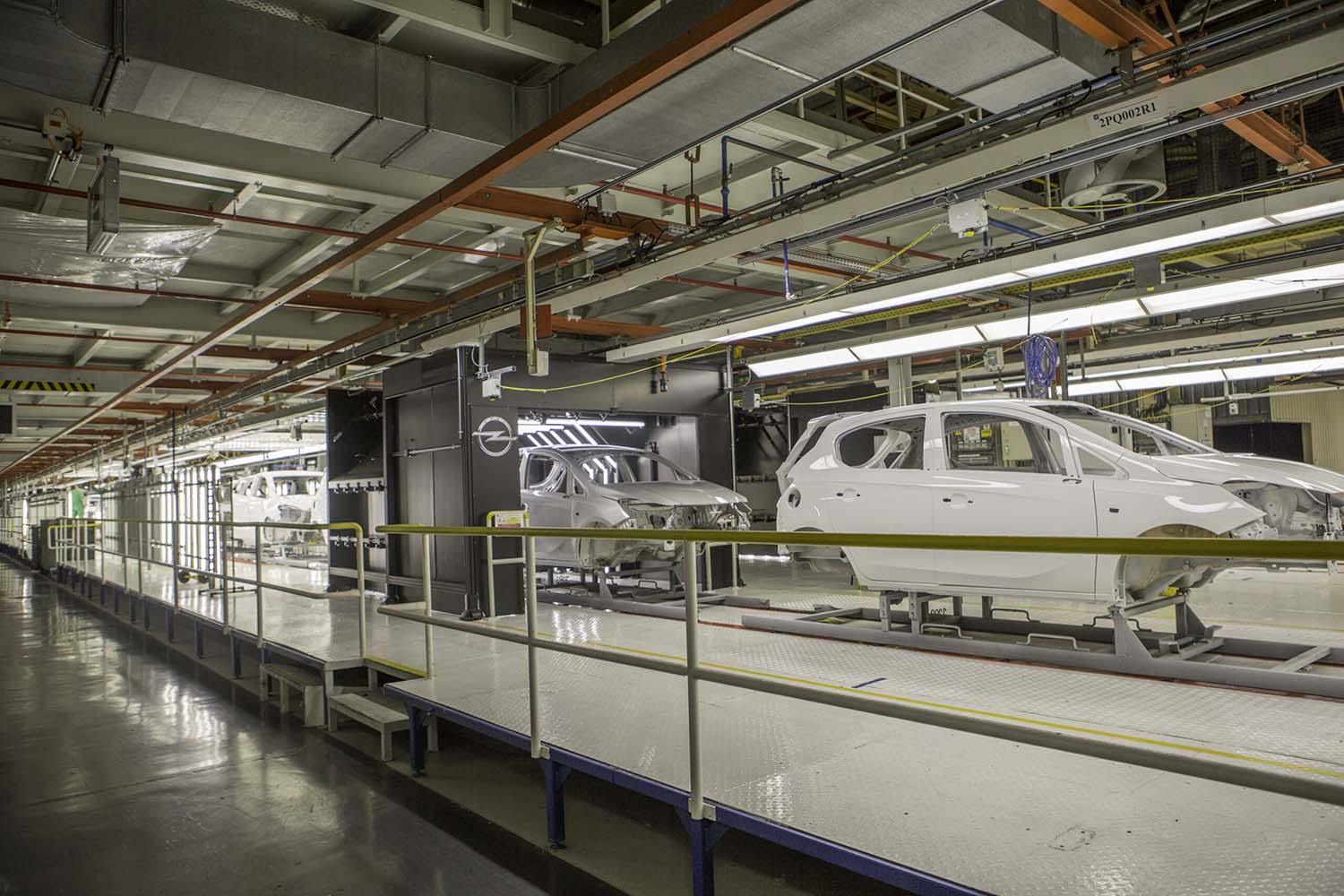
- Opel: Installed the first in-line system capable of evaluating moving car bodies, achieving 100% coverage of edges and characteristic lines.
- Stellantis Group (Fiat, Maserati, Jeep, Lancia, Dodge): Resulted in a significant reduction in rework and an increase in the perceived quality of the glossy finish.
These cases demonstrate the impact of automated car paint defect detection on cost reduction, productivity, and consistency.
Advanced technology and integrated systems
J3D Vision provides modular solutions adapted to each critical step of the painting process:
| Inspection Module | Purpose | Value for Production |
|---|---|---|
| Top Coat Inspection | Final glossy finish | Ensures perfect visual appearance |
| Primer Coat Inspection | Base matte layer | Prevents adhesion issues and optimizes top coat |
| ELPO Coat Inspection | Post-electrodeposition | Guarantees uniform corrosion protection |
| Under Body Inspection | Sealants, plugs, adhesives |
Technological advantages:
- Micron-level precision with 3D vision systems
- Industrial-grade reliability for 24/7 manufacturing
- Full integration with MES/PLC architecture
- Data-driven optimization through complete defect traceability
Request a Free Demo of J3D Vision
If you want to see how automated paint inspection can transform your manufacturing line, you can request a free demo. Our team will show you:
- See defects in top and primer coats instantly
- Cut rework and boost efficiency
- Integrate Eagle Eye without stopping your line
Request a free demo. J3D Vision turns advanced machine vision into a practical, profitable tool for achieving flawless automotive paint quality.